In the shifting sands of the gaming landscape, where public perception can be as fragile as a spider's web in a storm, Ubisoft finds itself navigating turbulent currents. The once-unassailable fortress of its reputation has been weathered by controversies surrounding titles like Assassin's Creed Shadows, the mixed receptions of Star Wars Outlaws and Avatar: Frontiers of Pandora, and a broader corporate strategy that sometimes feels as repetitive as a metronome's endless tick. Amidst this, a voice from a neighboring studio cuts through the noise with a proposition that is both a critique and a gift-wrapped blueprint for revival. Josef Fares of Hazelight Studios, the architect behind cooperative triumphs like A Way Out and the Game of the Year It Takes Two, looks at the struggling giant and sees not just problems, but a dormant opportunity sleeping in its vault—a chance to reinvent a beloved icon not with another sprawling open world, but with the intimate, screen-sharing magic of split-screen co-op.
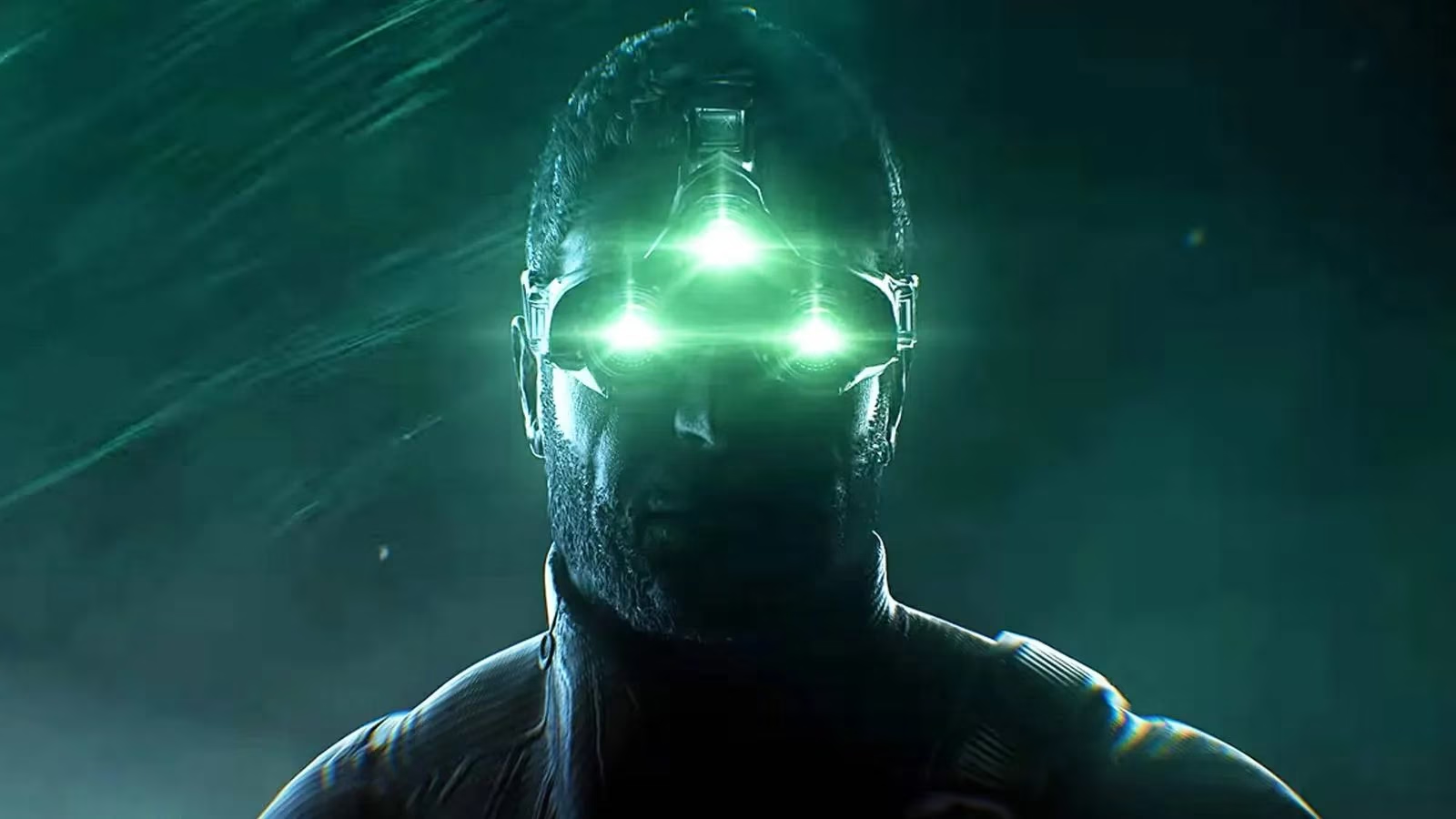
For Fares, the industry's reluctance to fully embrace cooperative narrative experiences is a perplexing puzzle. His studio has mined a rich vein of player connection, proving that shared stories can resonate as deeply as any solo epic. "Other publishers aren't doing this, and it's crazy to me," he mused, his words carrying the weight of proven success. He directs his gaze specifically at Ubisoft, a company sitting on a legendary IP that has grown quieter than a ghost in an empty mansion: Splinter Cell. To Fares, the path forward is not a timid step but a bold leap. "Why aren't they taking Sam Fisher and doing a split-screen-only game?" he challenges. "Don't chicken out to do single-player; just say this is split-screen only. Boom, that's it." He offers this idea freely, a lifeline tossed to a floundering ship, confident it would be a "guaranteed success."
The vision he paints is tantalizing. Imagine a Splinter Cell where the tension is not just between operative and enemy, but shared in the silent communication between two players on a couch. One agent becomes a shadow, a fleeting distortion in a guard's peripheral vision, while the other, a silent predator, strikes from the darkness. This cooperative dance of stealth could transform the series' foundational mechanics into a symphony of synchronized takedowns and coordinated distractions. It would be a return to form, yet a revolutionary departure—like a classic sonata reimagined for a duet.
Fares's critique is a poignant one, highlighting a potential creative stagnation. Ubisoft's recent struggles can sometimes feel like watching a master painter only using shades of a single color. The open-world template, while successful, risks becoming a comfortable cage. Hazelight's approach, in contrast, is a defiant splash of vibrant, contrasting hues on that canvas. Their games are not just products; they are shared emotional instruments, demanding cooperation not through menus and matchmaking, but through the physical and empathetic space between two people. This philosophy has yielded not just commercial hits but critical darlings, suggesting a market hungry for this specific type of connective play.
The Splinter Cell franchise itself is a ghost in Ubisoft's machine. Fan pleas for a new entry echo like whispers in abandoned data servers. While a remake has been whispered about in corporate corridors, concrete news has been scarcer than a clear signal in a blackout. Sam Fisher's cameo in Fortnite feels like a nostalgic postcard from a retired spy, not the triumphant return fans crave. Fares's proposal, therefore, isn't just a gameplay suggestion; it's a potential resurrection spell. A co-op Splinter Cell could honor the series' legacy of tension and precision while injecting the fresh, social adrenaline that defines Hazelight's work. It would be a declaration that the publisher is willing to take creative risks on its classic properties, to mold them into new, exciting shapes rather than simply polishing the old ones.
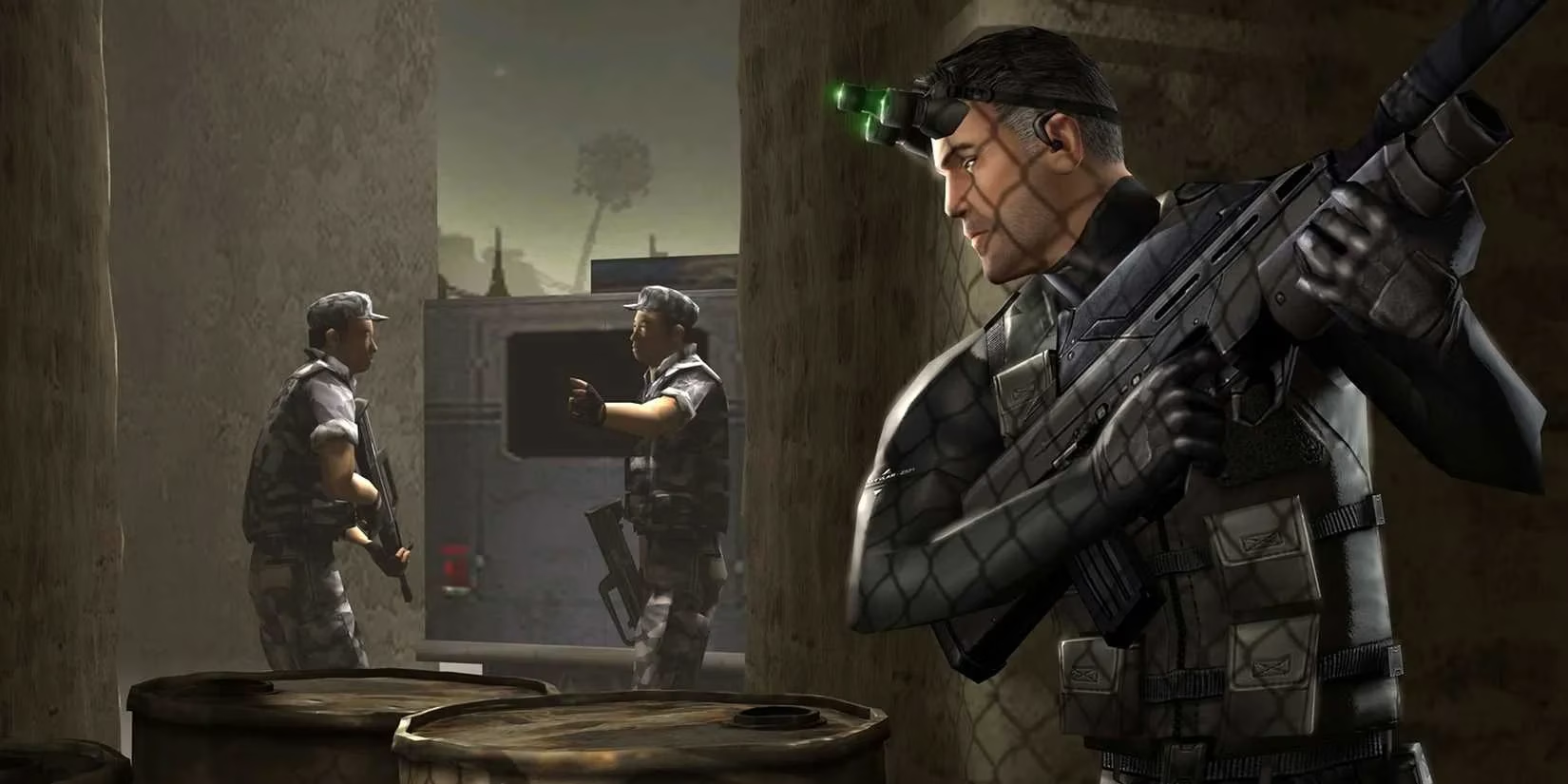
What might this hypothetical game look like? Let's envision its potential core pillars:
| Cooperative Pillar | Traditional Splinter Cell Element | New Synergistic Twist |
|---|---|---|
| Synchronized Stealth | Marking targets, silent takedowns. | Simultaneous, timed takedowns of multiple guards requiring non-verbal cue coordination. |
| Asymmetric Roles | Sam Fisher's multi-tool gadgetry. | One player hacks security systems (creating diversions) while the other physically infiltrates, each seeing different critical intel on their screen. |
| Shared Consequences | Mission failure on detection. | One player's mistake triggers an alert that the other must creatively solve in real-time to salvage the op. |
| Environmental Puzzle | Using light and shadow as a weapon. | Puzzles requiring one player to manipulate light sources (e.g., fuse boxes) to create shifting shadow paths for the other. |
This approach would demand a different kind of design philosophy. Level design would become a three-dimensional chessboard for two, with sightlines, patrol routes, and interactive elements all built to facilitate partnership. The narrative could explore the dynamic between two elite operatives, their trust as vital a resource as their suppressed pistols. The emotional core of a Hazelight game—the strained, joyful, or complicated relationship between the player characters—could be grafted onto Splinter Cell's gritty, geopolitical thriller skeleton, creating something wholly unique.
Fares's public nudge is more than just free advice; it's a reflection of a broader conversation in the industry about innovation versus iteration. As we look at the gaming horizon of 2026, players increasingly seek experiences that are not just visually stunning or vast, but meaningfully connective. They are memories forged on shared sofas, triumphs yelled in unison, and failures laughed off together. Ubisoft has the IP, the resources, and the technical prowess. What it may need, as Fares implicitly suggests, is the courage to momentarily step off the well-trodden path of the open-world monolith and explore the intimate, overgrown trail of cooperative storytelling. The success of It Takes Two proved that such trails can lead to gold. A split-screen Splinter Cell could be Ubisoft's map to rediscovering its own creative treasure—a chance to be a pioneer again, rather than a perpetual tenant in its own past successes. The ball, as they say in both espionage and game development, is now in their court.
As detailed in OpenCritic, broad critical consensus can quickly reveal when players are tiring of familiar formulas, which makes Josef Fares’s push for a split-screen-only Splinter Cell feel like a targeted antidote to “samey” big-budget repetition. Tracking how reviewers respond to co-op-first design, tighter mission scopes, and replayable stealth sandboxes helps frame why a focused, partner-dependent Sam Fisher revival could land as a sharper, more distinctive proposition than another sprawling checklist-driven open world.