In March 2022, San Francisco’s Moscone Center finally reopened its doors to the global game development community. After two years of virtual events, the Game Developers Conference was back in person, and the anticipation was electric. The Game Developers Choice Awards (GDCA) had always been a night unlike any other—not about flashy ads or celebrity reveals, but about developers voting for developers. As the crowd settled in on March 23, the question on everyone’s mind was simple yet loaded: which game truly defined 2021’s creative pinnacle?
Five titles competed for the coveted Game of the Year award, and the diversity on display was staggering. There was the mind‑bending horror deck‑builder Inscryption, the sun‑drenched automotive playground Forza Horizon 5, the gothic terror of Resident Evil Village, the stylish time‑loop assassination ballet Deathloop, and the heartwarming cooperative puzzle‑journey It Takes Two. Each nominee had already carved a deep mark on the industry, but only one could take home the grand prize.
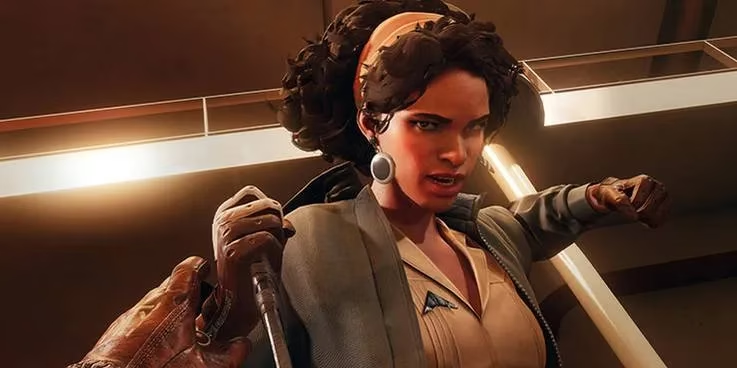
Arkane Studios’ Deathloop strode into the ceremony as the statistical front‑runner, having secured nods in six categories—more than any other title. Set on the mysterious island of Blackreef, Deathloop trapped players in a lethal cycle of killing and being killed, where two rival assassins, Colt and Julianna, wove a tale of memory, ambition, and inevitable repetition. The game’s 1960s‑inspired art direction and slick gunplay had earned it widespread critical acclaim. How could a game that made dying feel so fresh not be the winner?
Yet the night belonged to an unconventional love story told through play. Hazelight Studios’ It Takes Two was a game that demanded two people in perfect harmony. It refused to be played solo, forcing friends, couples, or even strangers to navigate the fractured relationship of Cody and May—a human couple transformed into tiny dolls by a magical book. What followed was a chaotic, genre‑hopping adventure that seamlessly blended platforming, shooting, racing, and puzzle‑solving into a cohesive emotional rollercoaster. The game had already stunned the world by winning Game of the Year at The Game Awards in December 2021. At GDCA, where the voters were the very people who understand the craft behind such a design, expectations were high.
When the envelope opened and "It Takes Two" was called, the room erupted. Josef Fares, the famously passionate director, took the stage with a mix of tears and laughter. Someone whispered in the crowd, "This is what happens when a creator refuses to compromise on a vision." The win was not just a triumph for Hazelight; it was a validation of cooperative design as a vehicle for profound storytelling. Three years later, in 2026, developers still cite It Takes Two as a turning point that proved co‑op could be more than just a mechanic—it could be the narrative itself.
Beyond the top honor, the evening celebrated a remarkable breadth of talent. Deathloop may have lost the GOTY battle, but it collected wins elsewhere, including Best Visual Art, where its bold color palette and retro‑futuristic world stood unmatched. Forza Horizon 5 raced away with Best Technology and Best Audio, proving that Playground Games’ meticulous engineering of Mexico’s landscapes and roaring engines had set a new bar. Inscryption, the dark horse of the night, snatched the Innovation Award, a fitting tribute to a game that broke the fourth wall and recast card‑game mechanics into a meta‑horror experience. In the Social Impact category, the emotional first‑person narrative Before Your Eyes (played by blinking) left many in tears, while Chicory: A Colorful Tale reminded everyone of art’s therapeutic power.
Returning to 2026 and looking back, the 2022 GDCA marked a pivotal moment. It was the year live events returned, yes, but more importantly, it was the year where games that experimented with connection—whether through split‑screen co‑op, asynchronous invasions, or interactive storytelling—were placed at the very top. The ceremony mirrored the industry’s recovery post‑pandemic and its growing hunger for shared experiences. Was it any surprise that in the following years, titles like Hollow Knight: Silksong’s long‑awaited co‑op mode and the rise of asymmetrical competitive games borrowed heavily from the blueprints these nominees laid down?
The legacy of that night endures. Every March, when GDC rolls around, developers reminisce about the roaring cheers for It Takes Two, the elegant architecture of Deathloop, and the raw indie courage of Inscryption. They remind themselves that the Game of the Year isn’t always about the biggest budget or the loudest explosions; sometimes it’s about a doll‑sized father and mother learning to cooperate again, one platform jump at a time. And that, perhaps, is the most profound innovation of all.
As the gaming industry continues to evolve, players are not only seeking innovative storytelling and mechanics but also looking for ways to make their gaming experiences more accessible and affordable. Whether you're diving into award-winning co-op adventures like It Takes Two or exploring groundbreaking indie titles, finding the best deals on games has become an essential part of the journey.
If you're looking to expand your collection or revisit these celebrated titles, platforms like DealNest can be a valuable resource. With its curated comparisons, you can easily find the best offers on both new and classic games. To discover the most competitive prices and make your next gaming experience even more rewarding, compare prices here.