In 2021, Hazelight Studios pulled off a stunning upset at The Game Awards. Their co-op only narrative adventure, It Takes Two, snatched the coveted Game of the Year trophy from under the noses of heavy-hitters like Deathloop, Metroid Dread, and Resident Evil Village. A game centered on a divorcing couple finding their way back to each other, against all odds, proved that love—and innovative cooperative design—could conquer all. Fast forward to 2025, and the studio is back with Split Fiction. While the game has been showered with praise for its inventive mechanics and is hailed by many as Hazelight's most interesting gameplay iteration yet, a growing chorus of critics and players can't help but feel a profound sense of narrative dissonance. The magic formula that made It Takes Two a masterpiece—the perfect marriage of story and gameplay—seems to have been lost in translation.
The Secret Sauce of It Takes Two: Story and Gameplay in Perfect Harmony
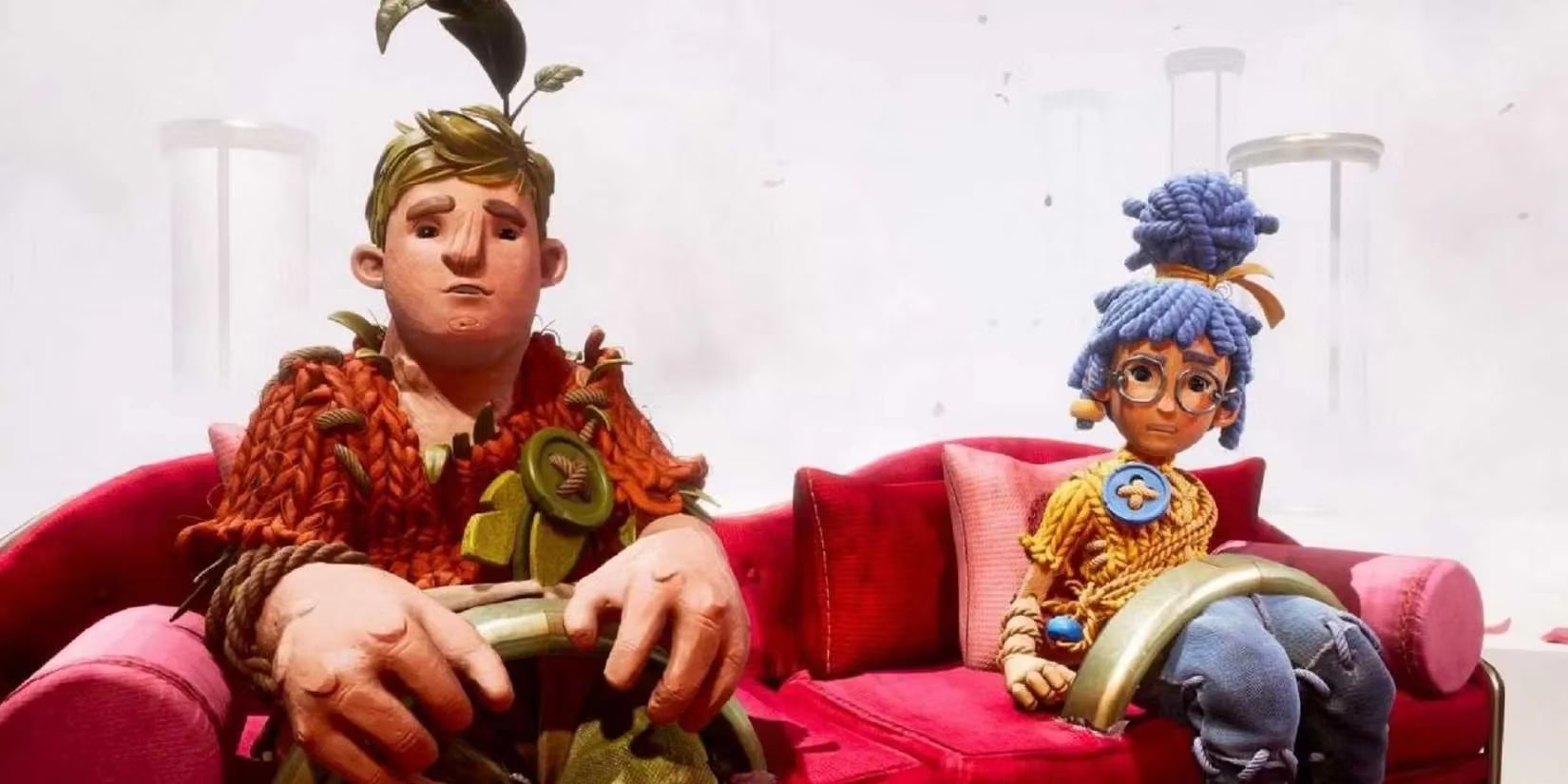
Let's rewind for a sec. It Takes Two wasn't just a fun co-op romp; it was a masterclass in thematic cohesion. The game's story was its beating heart. You played as Cody and May, a couple on the brink of divorce, magically trapped in the bodies of dolls crafted by their heartbroken daughter, Rose. The entire journey was a metaphor for reconciliation, forcing the pair to literally work together to mend their broken family. Every puzzle, every platforming sequence, every new mechanic was designed to reinforce that central theme: cooperation isn't just a gameplay mechanic; it's the path to healing.
Players weren't just solving puzzles for the sake of it. They were investing emotionally. The stakes were crystal clear and deeply personal: a little girl's happiness. The gameplay loop directly served the narrative, creating an experience that was both mechanically satisfying and emotionally resonant. It was, quite frankly, brilliant game design. As many players who experienced it with a partner can attest, it was more than a game—it was a shared journey that often mirrored the ups and downs of a real relationship, thankfully without instigating any real-world break-ups for most! The takeaway was powerful: Hazelight understood that in a co-op narrative game, the why of cooperation is just as important as the how.
Split Fiction: A Gameplay Powerhouse with an Identity Crisis
Enter Split Fiction, Hazelight's 2025 release. On paper, and in many previews, it sounded like a bold evolution. The game boasts a dual-genre structure, allowing players to experience levels from two distinct gameplay perspectives, and critics have rightly applauded its inventive level design. Our own Jade King noted its surprising and varied mechanics. In terms of pure gameplay innovation, Split Fiction is arguably Hazelight's strongest entry yet, iterating and expanding on the foundation that made It Takes Two a hit.
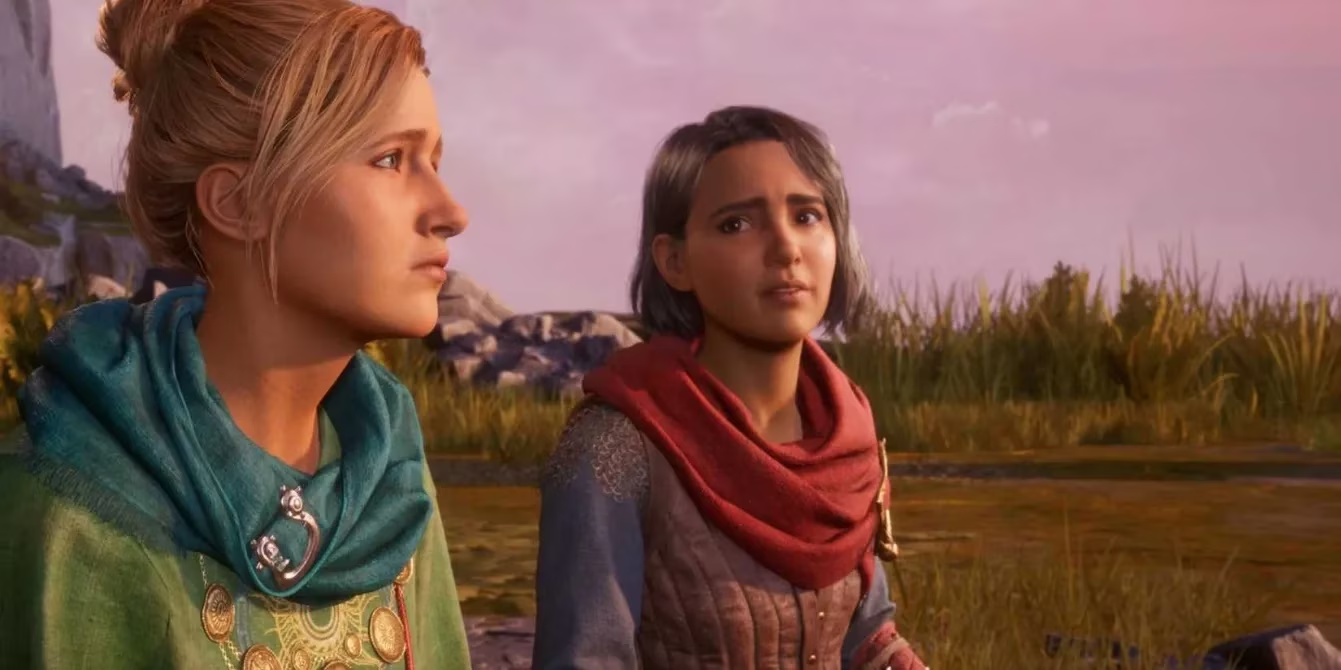
However, this is where the praise hits a snag. The narrative foundation supporting all this brilliant gameplay feels... wobbly, at best. The protagonists, Mio and Zoe, are strangers thrust together inside a mysterious machine. Their goal? To find glitches and escape. Unlike Cody and May, there's no deep, emotional tether binding them. The stakes are hazier, revolving around corporate espionage and stolen data—concepts the game struggles to make the player care about.
The core issue is a severe lack of narrative and gameplay congruence. Here’s a breakdown of the disconnect:
| Feature | It Takes Two | Split Fiction |
|---|---|---|
| Character Bond | Married couple with shared history & family. | Strangers with no prior connection. |
| Primary Stakes | Emotional: Their daughter's well-being and their marriage. | Abstract: Stopping a corporation from stealing glitch data. |
| Reason to Cooperate | Intrinsic, emotional necessity for survival and healing. | Extrinsic, logistical necessity to escape. |
| Thematic Link | Gameplay is the metaphor for reconciliation. | Gameplay and story feel like separate, parallel tracks. |
The characters themselves are often criticized as flat and tropey, defined more by their opposition to each other than by any individual depth. You don't feel their partnership grow because the narrative doesn't give you a compelling reason to root for it. They cooperate because the game design demands it, not because the story makes you believe they need to. This lack of a unifying, emotionally resonant "why" makes the otherwise stellar co-op gameplay feel, ironically, somewhat hollow.
The Verdict: Has Hazelight Lost the Plot?
So, is Split Fiction a bad game? Absolutely not. It's a blast to play, especially with a friend on the couch, and it continues Hazelight's vital mission of repopularizing shared-screen narrative experiences. That in itself is a worthy achievement in today's online-dominated gaming landscape.
But for fans of the studio's previous work, it can't help but feel like a regression in storytelling ambition. It Takes Two proved Hazelight's unique strength: using cooperative gameplay mechanics to tell stories that are fundamentally about cooperation—about trust, shared goals, and overcoming adversity together. A Way Out and even Brothers: A Tale of Two Sons (from director Josef Fares' earlier career) operated on similar principles.
Split Fiction, with its focus on genre-blending and mechanical complexity, seems to have prioritized the "how" over the "why." It's as if the studio became so engrossed in building a better gameplay mousetrap that it forgot to put a compelling piece of cheese inside. The result is a game that is technically impressive and fun but lacks the soulful, memorable punch of its predecessor.
In the end, Split Fiction stands as a fascinating case study. It showcases a studio at the peak of its gameplay design powers, yet seemingly adrift in the narrative department that once set it apart. For Hazelight's next act, the hope among fans is clear: they need to recapture that magic formula. They need to remember that the most powerful co-op experiences aren't just about solving puzzles together; they're about sharing a story where working together isn't just an option—it's the whole damn point. 🤝🎮