I still remember the night of December 8, 2022, as if it happened in a fever dream. I was glued to The Game Awards, and Josef Fares swaggered onto that stage like a rockstar with a secret weapon. He leaned into the mic, warning everyone to get ready because his next game would “blow your fucking mind.” Fast forward to 2026, and I’m here to tell you that Fares didn’t just deliver on that promise—he detonated a creative nuke that vaporized every expectation I had about cooperative storytelling. Hazelight Studios didn’t make another game; they forged an emotional rollercoaster that yanks your heart out, juggles it with a chainsaw, and hands it back wrapped in a warm hug.
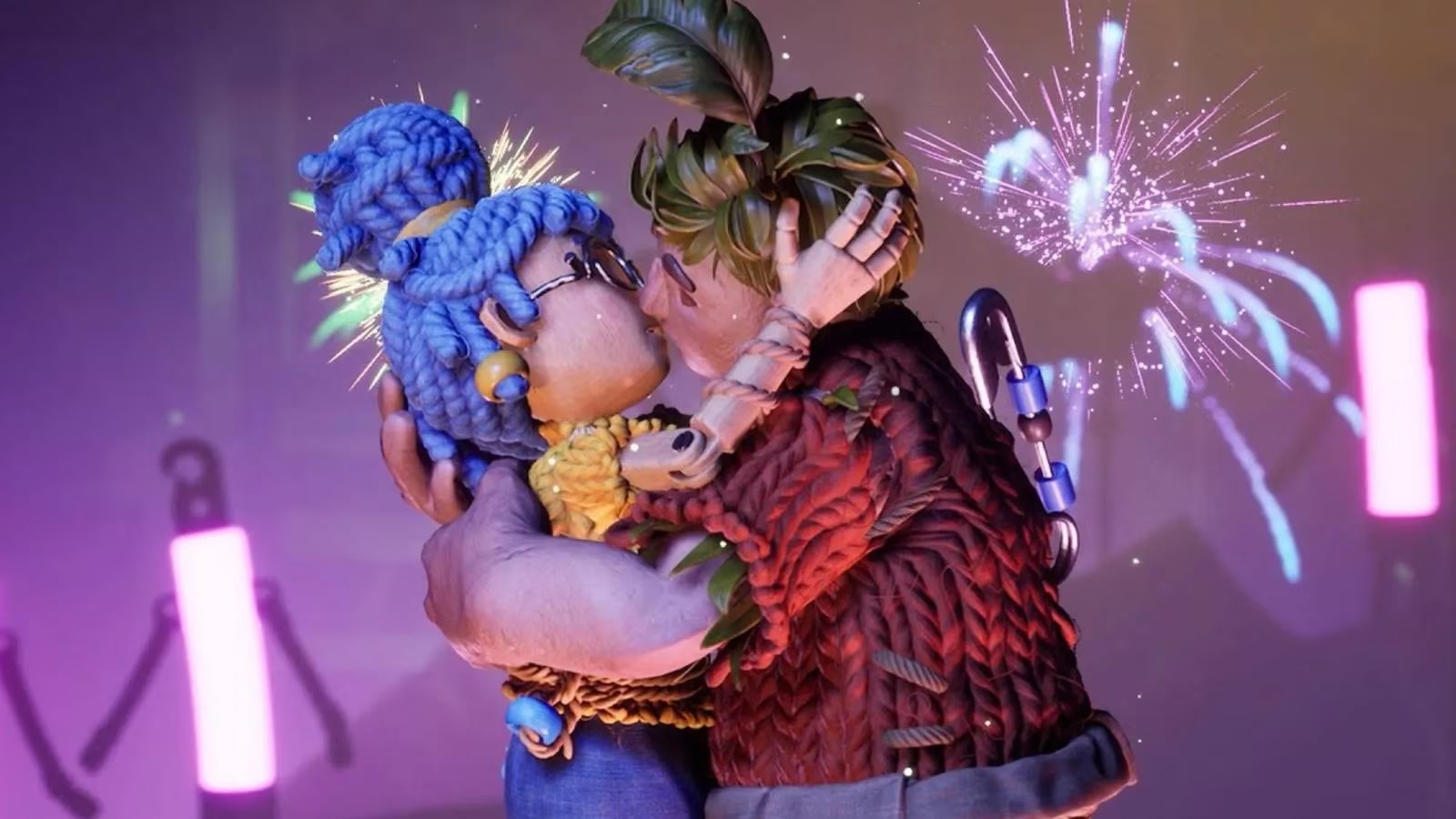
Let me paint the picture of the neon-soaked revelation that now lives rent-free in my psyche. After It Takes Two shattered seven million sales—mostly because the world was starving for a co-op game that didn’t feel like recycled oatmeal—Hazelight went dark for a while. We got a cryptic selfie in September 2022 showing two mocap actors, a neon sign screaming “CO-OP OR DIE,” and Fares grinning like a magician who just swallowed a firework. Back then, I was as nervous as a squirrel trying to cross a six-lane highway, because how do you top a game that turned marital strife into a playable metaphor? Turns out, the answer is to build something that makes It Takes Two look like a warm-up act.
When Riftbound (yes, that’s the actual title they dropped in 2024) finally launched, it felt like slipping into a parallel dimension where every surface drips with imagination. The premise is simple: two strangers trapped in a collapsing dreamscape must repair fractures in each other’s memories by solving puzzles that require genuine, empathetic teamwork. But describing it so clinically is like calling the Northern Lights “some colorful sky stuff.” The gameplay loop is a precision Swiss watch crafted by a mad horologist—each gear meshes with an emotional beat, and if one player fumbles, the entire symphony screeches to a halt in the most hilarious way possible.
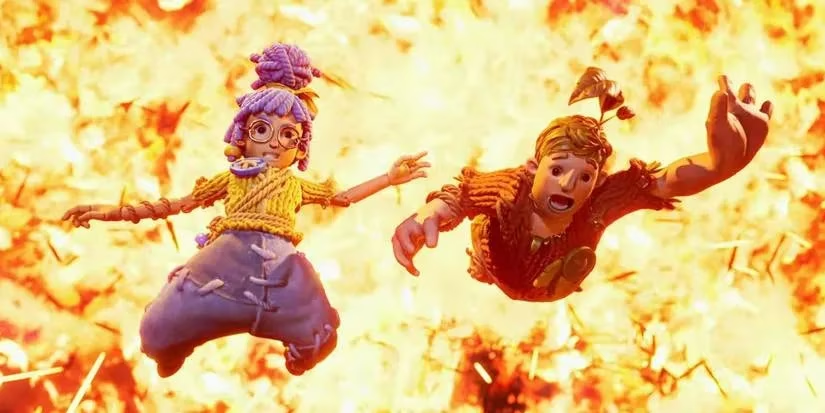
Now, I’ve got to gush about how this game uses split-screen. Remember Fares explaining in 2022 that It Takes Two on Switch had to render everything twice? Well, Riftbound takes that double-rendering idea and transforms it into a narrative crowbar. One moment you’re chasing a shadow monster through a clockwork city rendered in glistening raytraced glory; the next, you’re simultaneously controlling a flock of origami birds while your partner plays a rhythm game that rearranges the level geometry. It’s like trying to pat your head, rub your belly, and recite Shakespeare while falling down an Escher staircase—but somehow, it works flawlessly. The engine purrs at 60 fps even on the now-venerable Switch 2, a technical miracle that Fares gleefully admitted was “absolute hell to optimize.”
Here’s where the true genius lies: unlike most co-op titles that treat the second player as a glorified sidekick, Riftbound weaves interdependence into the story’s DNA. There’s a chapter where player one replays a childhood memory of a failed piano recital while player two defends against guilt-monsters by composing a melody on a glowing xylophone. If either player falters, the memory corrupts, and you’re both plunged into a distorted nightmare that looks like Salvador Dalí projectile-vomited over a Tim Burton set. The tension is as thick as cold molasses, and the shared triumph when you finally synch up feels like summiting Everest with your best friend.
🗣️ “Get ready for me man, I’m coming. Trust me… it will blow your fucking mind.” — Josef Fares, 2022. He was right.
In the bustling landscape of 2026, where AI-generated content floods every storefront, Riftbound stands as a defiant monument to human-centric craft. Every environmental puzzle required not just coding but actual actors performing mocap in tandem, a process Fares described as “conducting an orchestra of lunatics.” The voice performances—featuring live sessions where the lead actors improvised jokes to each other—crackle with spontaneity. And the physics engine? Hazelight built a custom layer that lets players literally throw pieces of the environment at each other’s side of the screen. I once killed my partner with a teacup because they wouldn’t stop humming off-key, and the game rewarded me with a hidden achievement.
What truly floors me is how much deeper the co-op genre could go. It Takes Two already proved that great co-op games are an endangered species, but Riftbound has planted a flag on a whole new continent. Last week, I played through the final act with a stranger online (voice chat mandatory, no text crutch), and we ended up sobbing into our headsets during the closing scene where our characters chose to stay in the dream together. It felt like the kind of catharsis you get from a decade-long friendship, compressed into eleven hours.
Hazelight’s trajectory from A Way Out to now is like watching a lightning bolt learn to sculpt marble. The studio has become the undisputed hive queen of cinematic co-op, and Fares’ brash confidence has transformed from controversial quirk to prophet-level clairvoyance. As I write this, rumors are already swirling about their next project—supposedly a three-player epic that bends spacetime. Whatever it is, I’ll be first in line with a helmet and a spare pair of underwear, because if Hazelight has taught me anything, it’s that the line between videogame and life-altering experience is a thin, easily shattered membrane. And Fares just loves to shatter things.