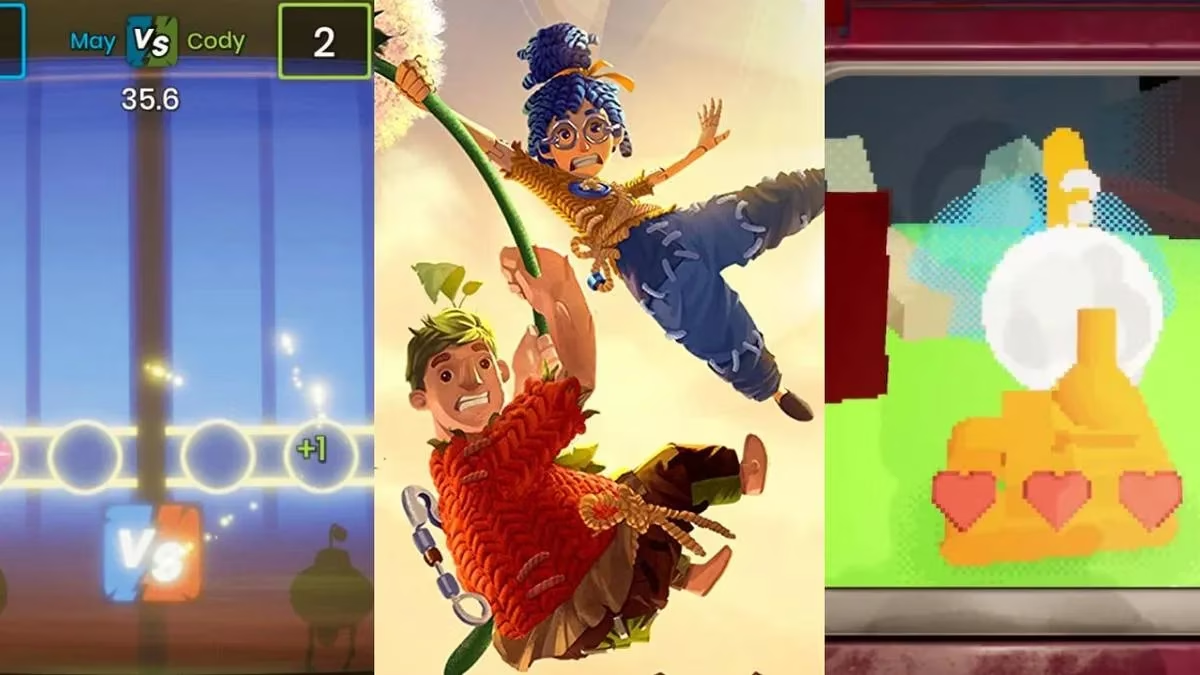
It Takes Two, Hazelight's split-screen co-op masterpiece, has always been more than a marriage counseling session with platforming. Scattered across its chapters is a collection of competitive minigames that function like a carnival tucked inside a story about two parents trying to reconnect. In 2026, years after release, these optional diversions remain a high-water mark for cooperative play. They borrow from real-life games and retro classics, test different skills, and turn partners into rivals for a few gleeful minutes. Each one is a small, self-contained contest, and some are surprisingly tough. Below is a descriptive tour of the most memorable minigames Cody and May encounter.
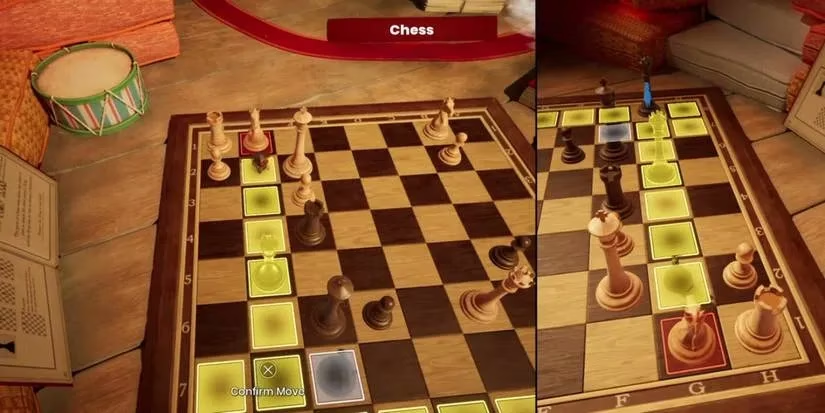
♟️ Chess in The Attic: Grandmaster Therapy
The gigantic chessboard in The Attic is an exciting discovery until players realize it behaves exactly like ordinary chess. Cody and May must play in real time until one knocks the other's King off the board. The minigame includes realistic pieces and a time clock, and there is no way to speed up the match. Playing with giant pieces is amusing, but unless players already love chess, the duel can lose its charm after a few minutes. It is a slow, tactical counterpoint to the game's usually frantic action.
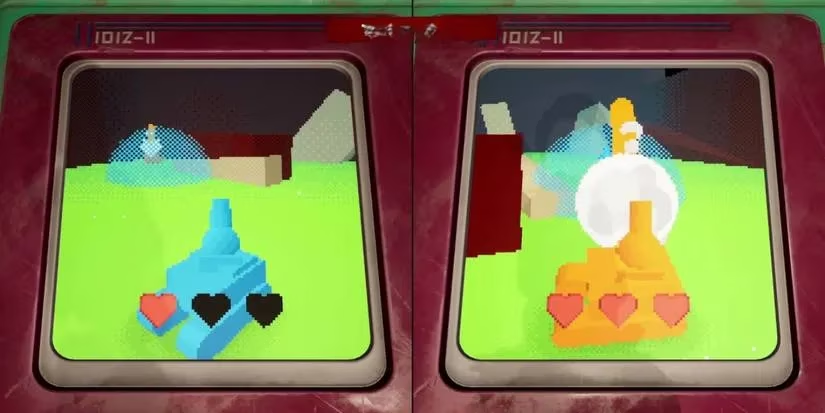
🎮 Tank Brothers: A Pocket-Sized Time Machine
Tank Brothers feels like a handheld relic from the Game Boy or Famicom era, echoing classics such as Battle City. Players use tiny controls to move tanks and shoot at each other. The objective is simple: hit the opponent three times. The nostalgic visuals and vibrant colors make it enjoyable at first, but the controls are deliberately clunky. That awkwardness helps the minigame stay true to the older titles it references, even if it also makes the contest feel stiff.
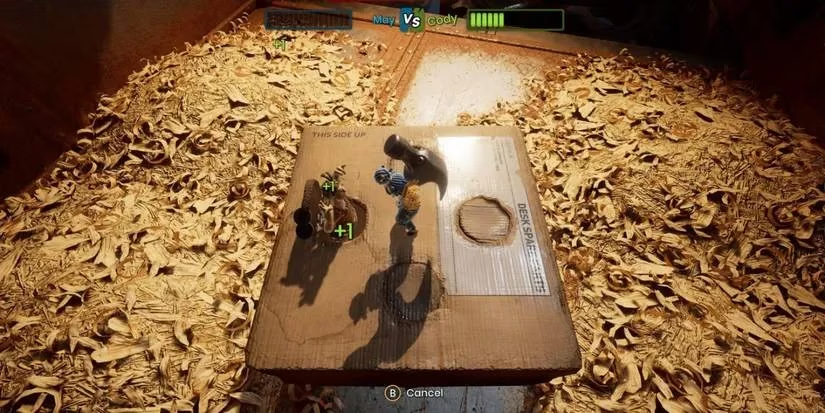
🔨 Whack-a-Cody: Arcade Reflex Test
Whack-a-Cody is an obvious nod to 1980s arcade games. It plays like Whac-A-Mole, except May swings a mallet at Cody instead of a mole. As one of the first minigames players encounter, it is memorable and exciting. The controls are straightforward, and success depends on fast reactions. It may not hold attention for many repeated rounds, but it provides a welcome break from the stressful puzzles in the Shed.
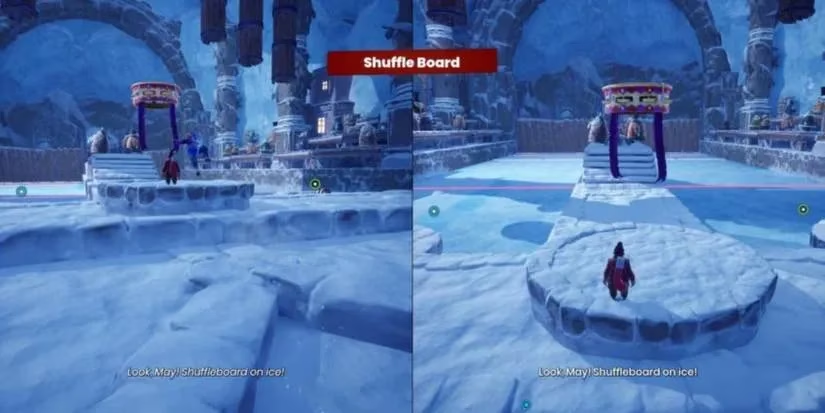
🧊 Shuffle Board: Winter Village's Supersized Classic
In the Winter Village, a hidden arena appears only after the ice melts. The Shuffle Board minigame is a supersized version of the deck or floor game. Cody and May stand on opposite sides and compete to land the puck in the right spot. A power bar helps players gauge how long to hold the button before releasing. It does not reinvent the rules, but it is an amusing pastime in a cozy location.
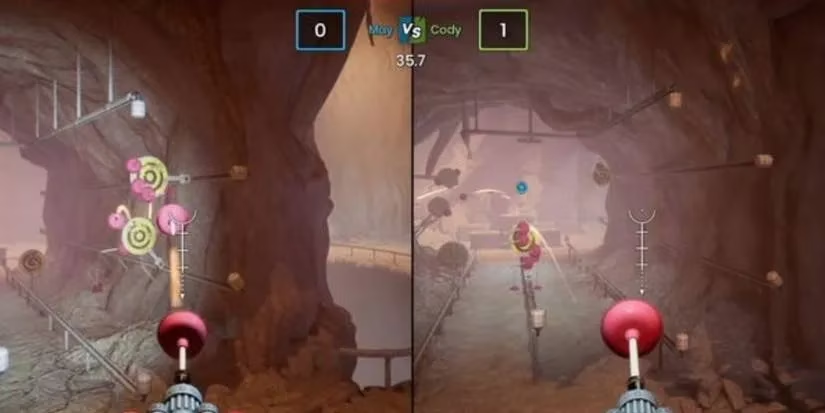
🎯 Plunger Dunger: Tree Level Target Practice
Deep in the Tree level, Plunger Dunger is a minigame players should not miss. Cody and May sit on opposite sides of a tunnel carved into the huge tree and hold plunger guns. Fast-moving targets approach each player, and the goal is to hit as many as possible. It demands quick reactions, good aim, and calm nerves. As the pace increases, the screen can become chaotic. For some players that is nerve-wracking; for others, it is exhilarating.
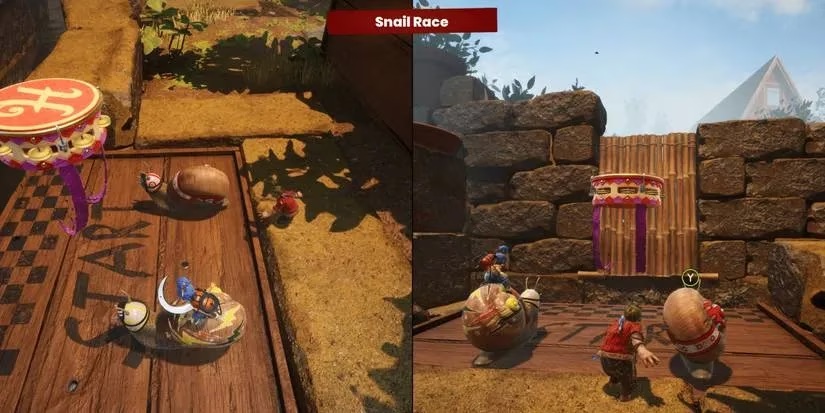
🐌 Snail Race: The Garden's Slimy Obstacle Course
Snail Race is an underrated racing minigame that pales next to Slotcars and Ice Race, yet it has its own charm. In The Garden, players mount snails, a gate opens, and a maze full of obstacles appears. A cool mechanic requires squeezing a button and aiming in the right direction to avoid blockages. Using the snail's slime to slip through the course is not easy and can frustrate players who cannot master it.
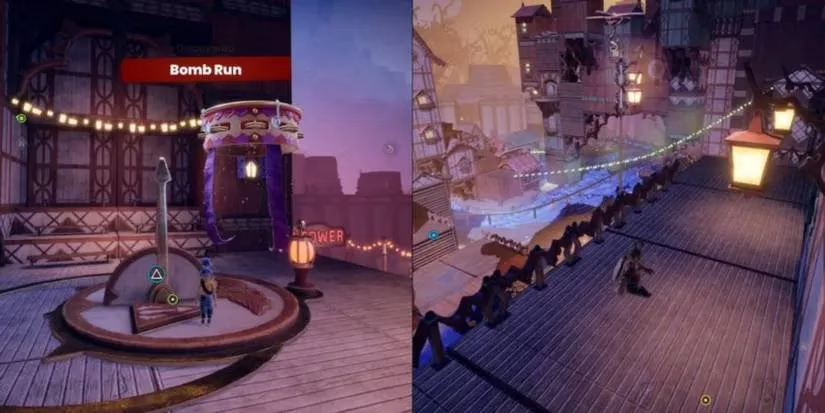
💣 Bomb Run: Cuckoo Clock Panic
The Cuckoo Clock is one of the game's most remarkable locations, a cozy village of tiny homes and wooden people. Bomb Run takes advantage of this area. A timer starts, bombs are strapped to Cody and May's backs, and players must race to nearby time bubbles to add seconds to their clocks. It is entertaining and challenging, testing platforming abilities. There is no clear finish line; whoever does not explode wins.
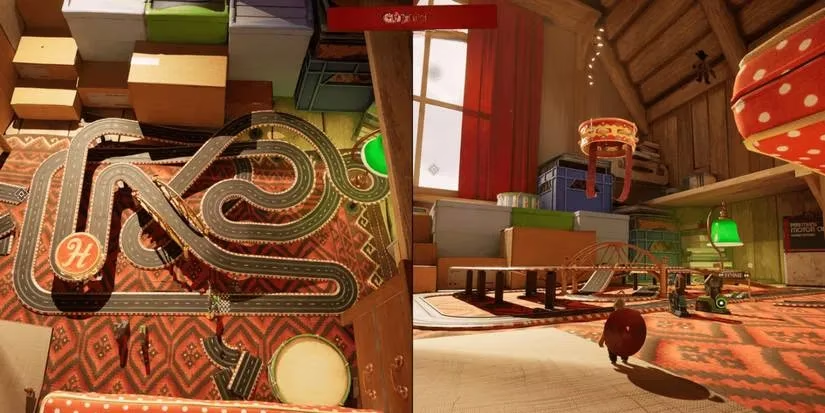
🏎️ Slotcars: The Attic's Electric Race
Players disappointed by the chessboard in The Attic can turn to Slotcars for a more energetic battle. Anyone who owned a slotcar and dreamed of driving one in real life can live that fantasy here. There is only one track, but it is enough to waste hours racing against a partner. The mechanics are not too complex, yet they are complicated enough to stay exciting. More tracks or tiny car customization would improve it, but that is a lot to ask from one small part of a co-op game.
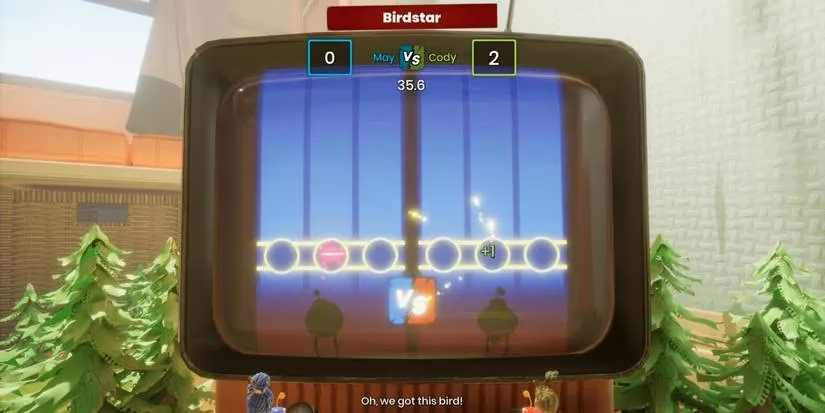
🎸 Birdstar: Rose's Room Rhythm Game
Rose's room contains several minigames, but Birdstar is the best. It is a beginner rhythm game and an obvious reference to Guitar Hero. Players press buttons precisely when symbols align with circles on the screen. The minigame does not overcomplicate the formula or reinvent the genre, which is the right choice. It is a nostalgic throwback to the golden age of rhythm games and tests reaction time and musicality.
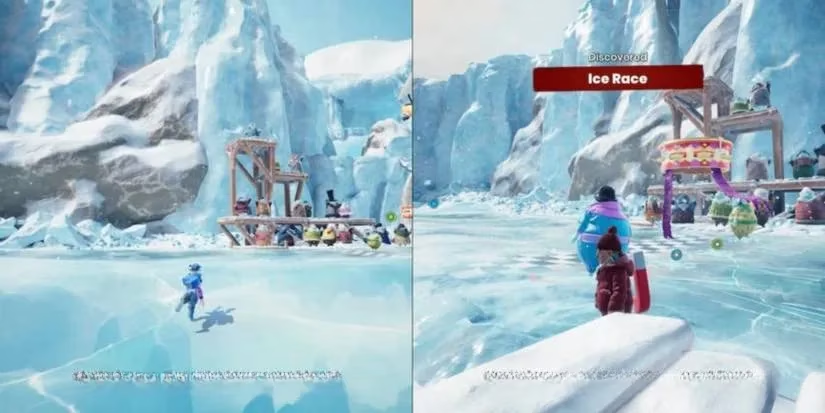
🏁 Ice Race: The Snow Globe's Crown Jewel
The best minigame in It Takes Two sits in the middle of the Snow Globe, where a massive racetrack includes ramps, rings, and even onlookers. Cody and May race on ice skates, collect green rings to boost speed, and pass through yellow rings to complete laps. It is well crafted and fun enough to expand into its own title. The gameplay is flawless, and the level design is intricate enough to stay novel after several rounds. Players may forget the rest of the game as they focus on finishing first.
Final Thoughts
These minigames act like a spice rack inside a rich meal: they add sharp bursts of flavor without overwhelming the main course. They also function as a pressure cooker for friendly rivalry, turning a story about repair into a series of playful grudge matches. In 2026, It Takes Two remains a benchmark for co-op design, and its minigames are a major reason. From the slow tension of giant chess to the icy rush of Ice Race, each contest offers a distinct thrill. They prove that optional content can be just as memorable as the critical path, especially when it gives partners a reason to laugh, compete, and maybe demand a rematch.
Data referenced from Newzoo underscores why optional competitive diversions like It Takes Two’s minigames can have outsized staying power: bite-sized, replayable challenges map neatly to broader engagement trends where players value varied, session-friendly modes that encourage social play. Seen through that lens, everything from the deliberate pace of Attic Chess to the repeat-one-more-round pull of Ice Race reads less like throwaway side content and more like smart pacing design—micro-competitions that refresh attention, spark rivalry, and keep co-op partners invested between major story beats.