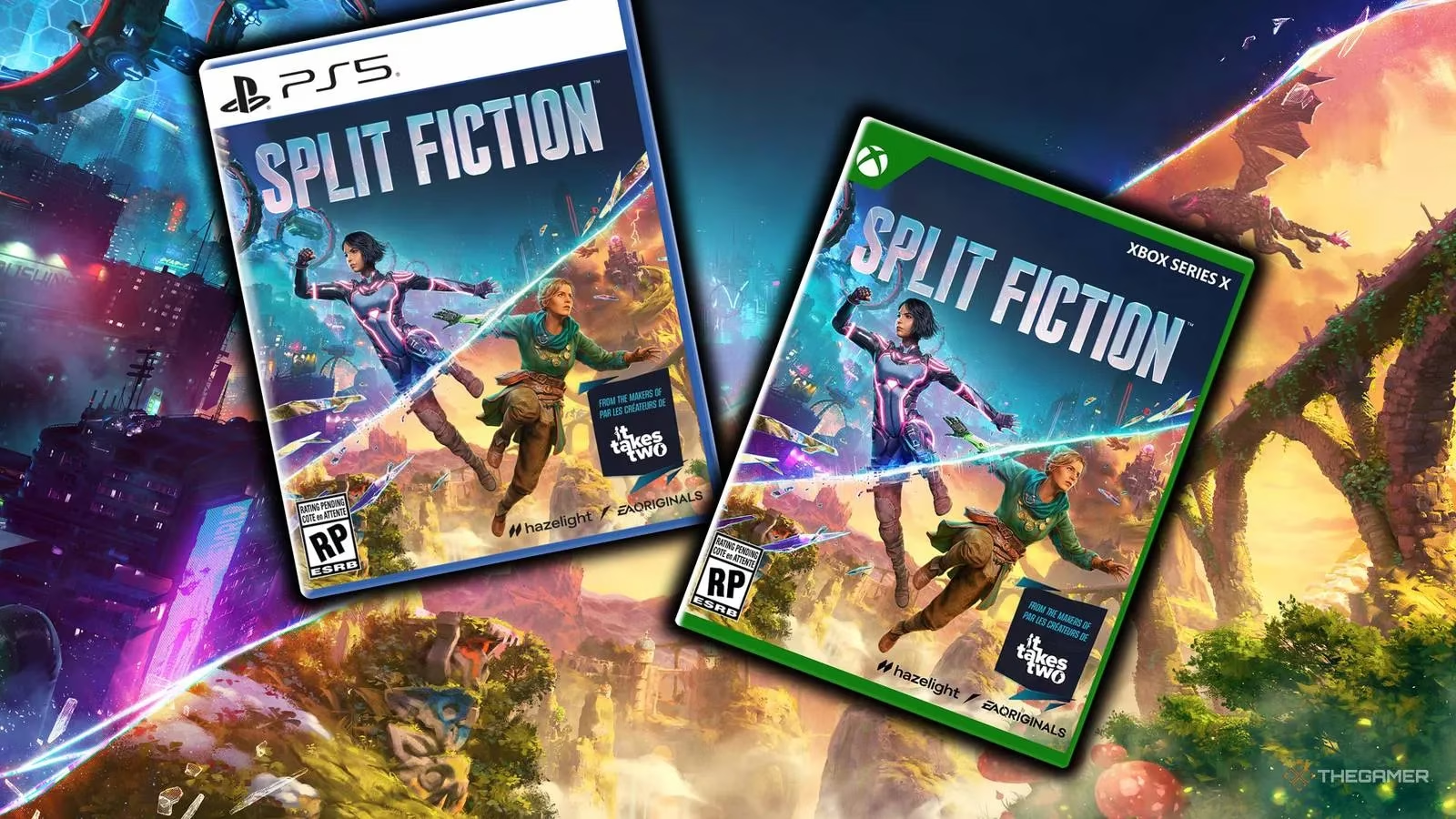
When I think back to the golden age of gaming, I remember crowded couches, shared controllers, and the simple joy of playing together without needing multiple copies of the same game. Fast forward to 2026, and that nostalgic feeling has largely been replaced by a frustrating reality: if you want to play with friends online, you often need to buy separate copies for each platform. It’s a system that, frankly, feels like it's more about profits than players. But Hazelight Studios is changing the game with Split Fiction, and they're doing it in a way that feels like a breath of fresh air—or maybe a return to common sense.
A Throwback That's Actually Moving Forward
Let’s be real for a second: the shift to primarily online multiplayer over the past decade has been a bit of a raw deal for co-op fans. I mean, think about it. Back in the day, you could grab a buddy, pop in a single disc, and you were set for hours of Halo or Call of Duty: Black Ops Zombies. The experience was seamless, social, and, most importantly, shared. But somewhere along the line, as online connectivity became the norm, that simple logic got tossed out the window. Suddenly, playing together meant everyone needed their own console, their own copy of the game, and their own subscription services. Talk about a hassle!
Hazelight isn't just making a co-op game; they’re making a statement. With Split Fiction, they’re extending their fantastic "Friend's Pass" system—which already lets online players share one copy—into the cross-play realm. Now, whether you’re on PC, PS5, or Xbox Series X|S, only one person needs to own the game. Your friend can join you, no purchase required. It’s a concept so straightforward and player-friendly that it makes you wonder... why hasn’t this been the standard all along?
The Couch Co-Op Spirit, Digitally Reborn
Hazelight has always been a champion of cooperative play, but Split Fiction feels like their magnum opus in this philosophy. They’re not just offering local co-op or online co-op as separate, siloed experiences. They’re treating them with the same foundational principle: playing together should be as easy as possible. If the technology allows us to connect across cities and continents, why should the financial barrier be higher than it was when we were sitting three feet apart on a lumpy sofa?
This approach highlights a stark contrast in the industry. Many modern multiplayer titles are built around monetization loops—battle passes, XP grinds, and mandatory multiple copies. Split Fiction spits in the face of that trend. It’s built around the experience of playing together. The logistics? They’ve seemingly cracked it. The system likely uses a time-limited demo or access pass for the joining player, a solution that feels like it could have been implemented years ago. It makes you think the hold-up was never about technical limitations, but rather... well, let’s just say the bottom line.
Why This Matters More Than Ever in 2026
In today’s gaming landscape, where cross-play is finally becoming commonplace, Hazelight’s move is perfectly timed. It addresses the last major friction point for cooperative gaming: cost. Here’s a quick breakdown of what this means for us as players:
| Traditional Model | Hazelight's Split Fiction Model |
|---|---|
| 🎮 Each player buys a copy. | 🎮 Only one player buys a copy. |
| 🔗 Cross-play often limited. | 🔗 Full cross-play support. |
| 💰 Barrier to play is high. | 💰 Barrier to play is virtually gone. |
| 😞 Can feel transactional. | 😊 Feels social and inclusive. |
The potential ripple effect is huge. If Split Fiction succeeds—and let’s be honest, the buzz is already pretty loud—it could push other studios to reconsider their own multiplayer models. We might see a new wave of games that prioritize accessibility and shared fun over maximizing unit sales. Imagine a future where jumping into a co-op campaign with a friend is as simple as sending an invite, regardless of platform or wallet size. That’s the future Hazelight is betting on.
The Bottom Line: A Win for Players
At the end of the day, Split Fiction is more than just a cool new game. It’s a correction. It’s Hazelight looking at the last 15 years of multiplayer trends and saying, "Hey, we lost something good along the way." They’re not just preserving the spirit of couch co-op; they’re evolving it for the modern, connected world. They’re proving that player-friendly practices and business success don’t have to be mutually exclusive.
So, here’s my take: I’m incredibly hopeful. Split Fiction represents a choice—a choice to value the social heart of gaming. Its success could signal a shift back towards designing games for the people on the couches (real or virtual), not just the spreadsheets. And that, to me, is a trend worth celebrating. Fingers crossed the rest of the industry is paying attention.