I still remember the first time I realized that not all heroes wear capes—some wear the invisible mantle of parenthood, and others the stained lab coats of twisted scientists. As a lifelong gamer navigating the digital jungles of 2026, I’ve been chased by tyrants, mourned fallen siblings, and celebrated pixelated weddings. But the characters who linger longest are often the parents, those complex figures who act as the hidden gravity well in a story’s galaxy, pulling constellations of tragedy, redemption, and chaos into orbit around them.
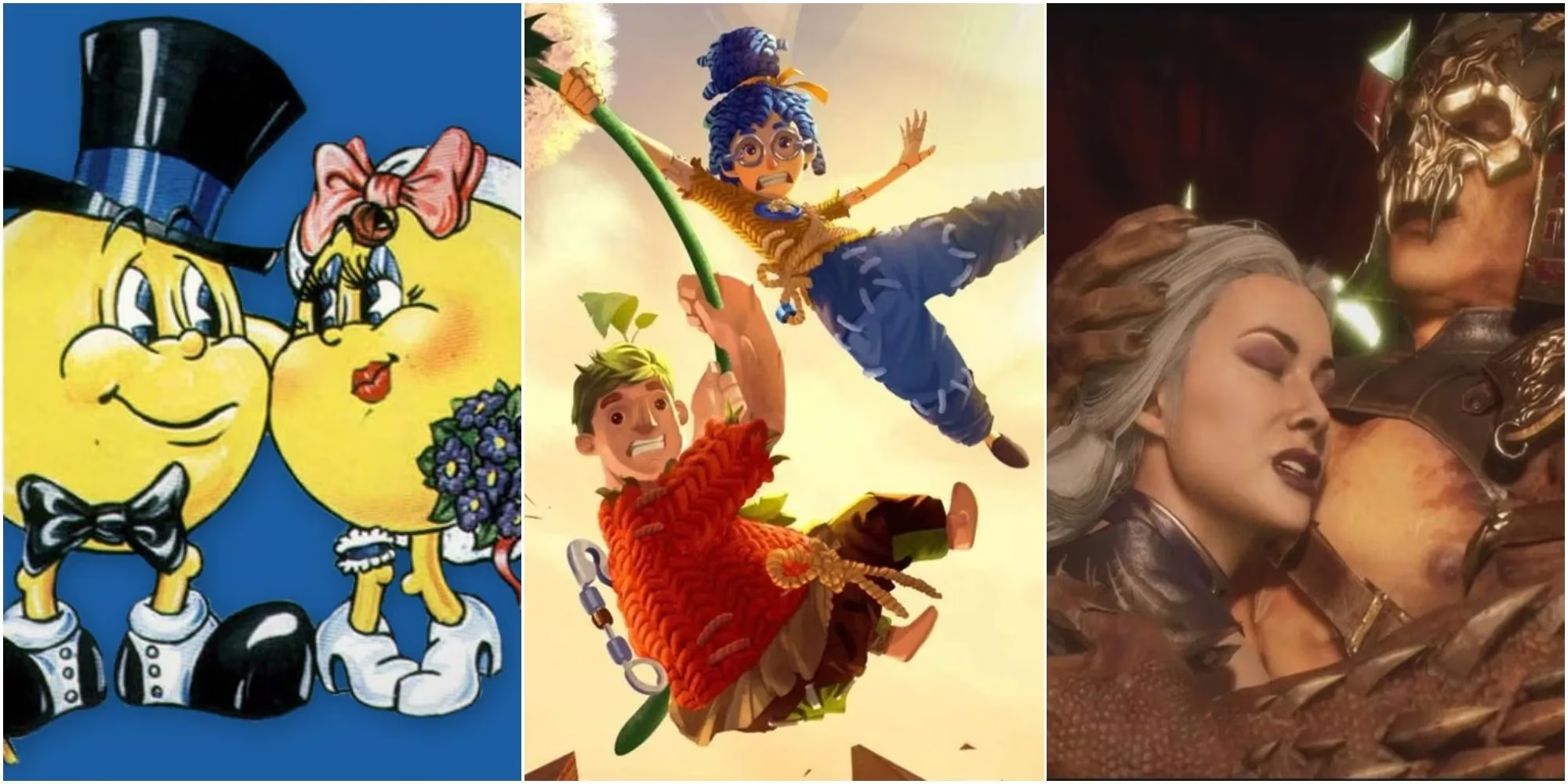
Growing up, I bounced from one cartridge to another without thinking much about the adults behind the protagonists. Yet as I retraced those steps with older eyes, certain parental pairings surfaced like sunken ships in a misty bay—each a rusted curiosity that, once raised from the depths, revealed a hull full of unexpected cargo.
Seeds of Tragedy: The Parents Who Made Villains
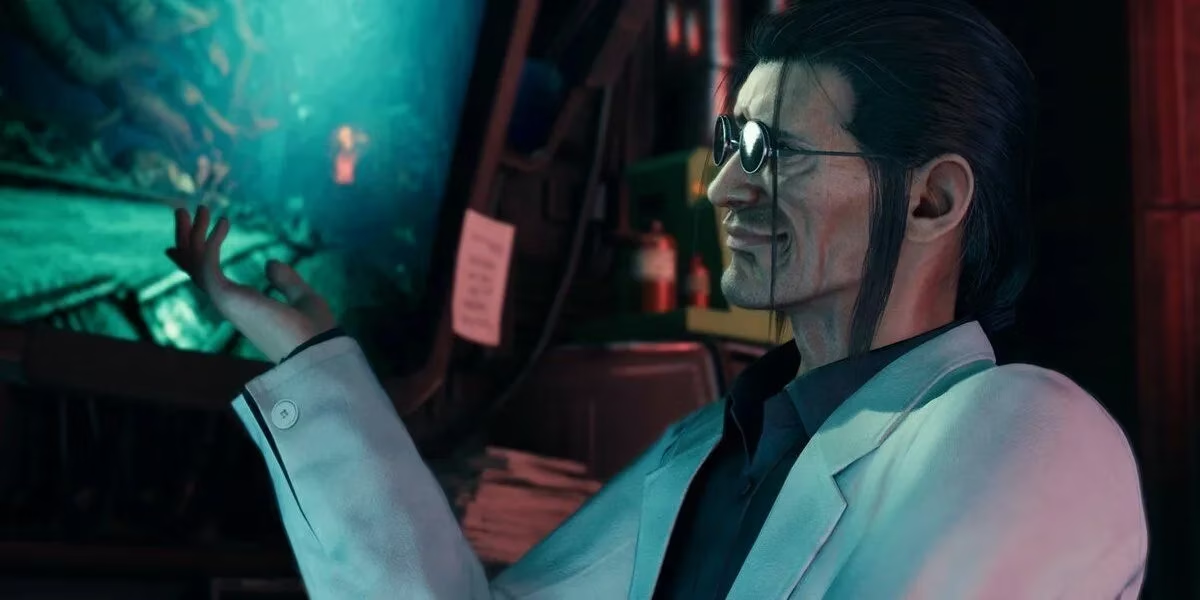
In the sprawling opera of Final Fantasy 7, Hojo and Lucrecia stood as a monument to catastrophic love. Hojo, the mad virologist whose smile curdled the air, injected Jenova cells into a pregnant Lucrecia, and from that bitter womb emerged Sephiroth, the silver-haired calamity. This parentage is a seed planted in poisoned soil—it blooms not into a flower but a blade. When I first learned the full story through Dirge of Cerberus, I felt a chill that rivaled any jump scare. Without these two, the entire Compilation of FF7 would lose its magnetic north.
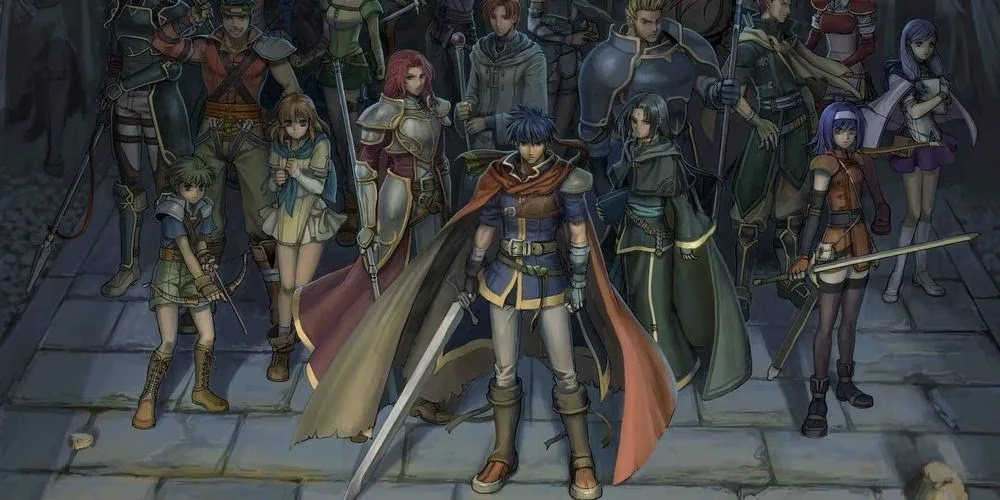
Fire Emblem gifted us Griel and Elena, whose sorrowful history is the undercurrent beneath Ike’s relentless honor. Griel, driven to madness by a desperate mistake, struck down the woman he loved, yet Elena’s final whisper was forgiveness. That moment, relayed through fragmented memories, is the emotional kindling that lights Ike’s mercenary path. It’s as if the entire Tellius saga is a lantern filled with this couple’s unresolved grief, casting long, flickering shadows on every battle.
Rot and Resilience: When Parents Become Monsters—and Miracles
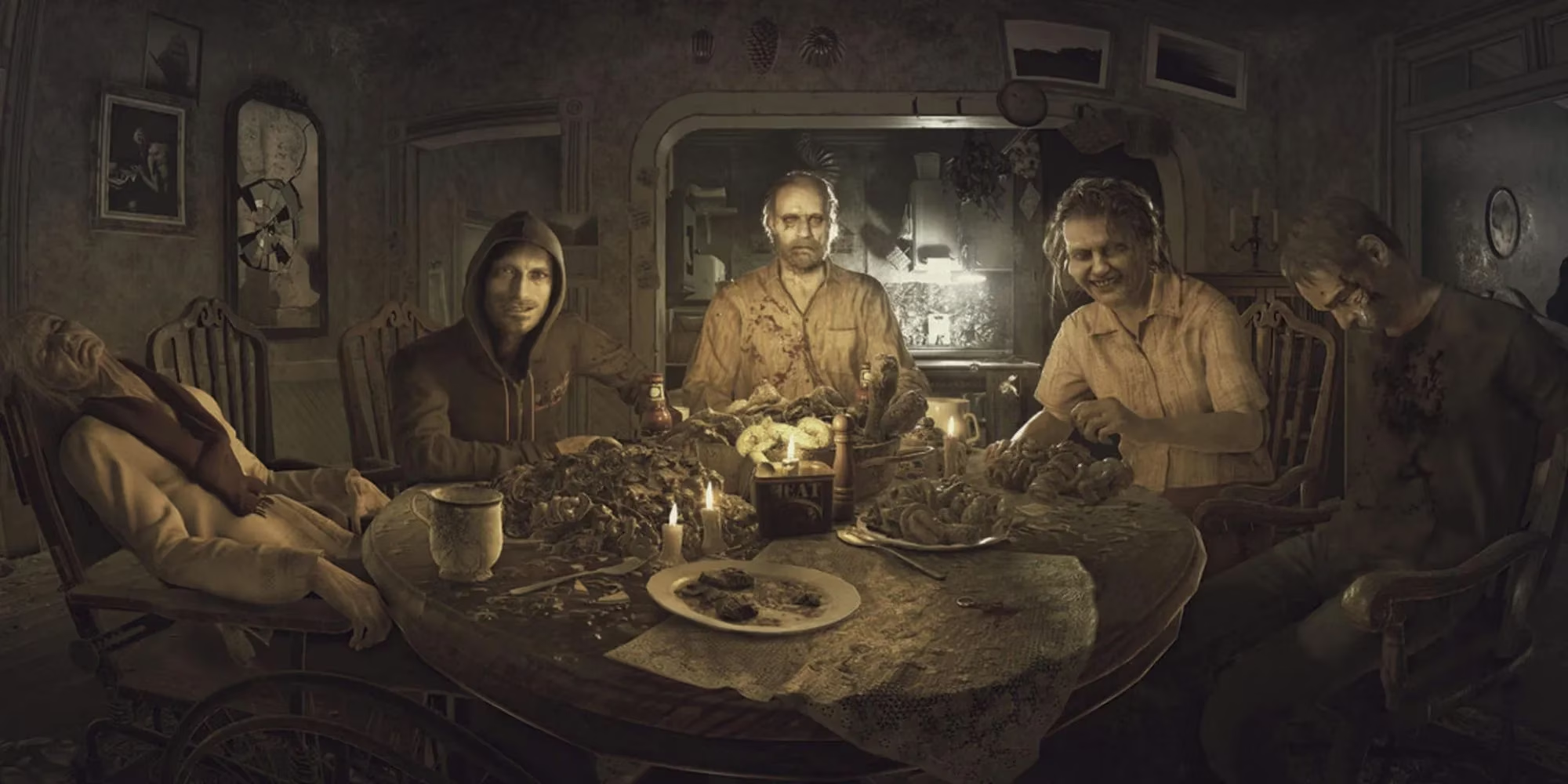
Resident Evil 7 served me a double shot of parental horror with the Bakers. Jack and Marguerite were like mushrooms that sprouted from a corpse—thriving on decay, shaped by the Mold, yet they once had a farm, a family, a fragile happiness. My knuckles whitened during Jack’s relentless pursuit, but something shifted when, in a rare lucid moment, he whispered a plea for escape. That flicker of humanity in a monster was a gut-punch, a reminder that even the most grotesque parents are often victims of a larger nightmare.
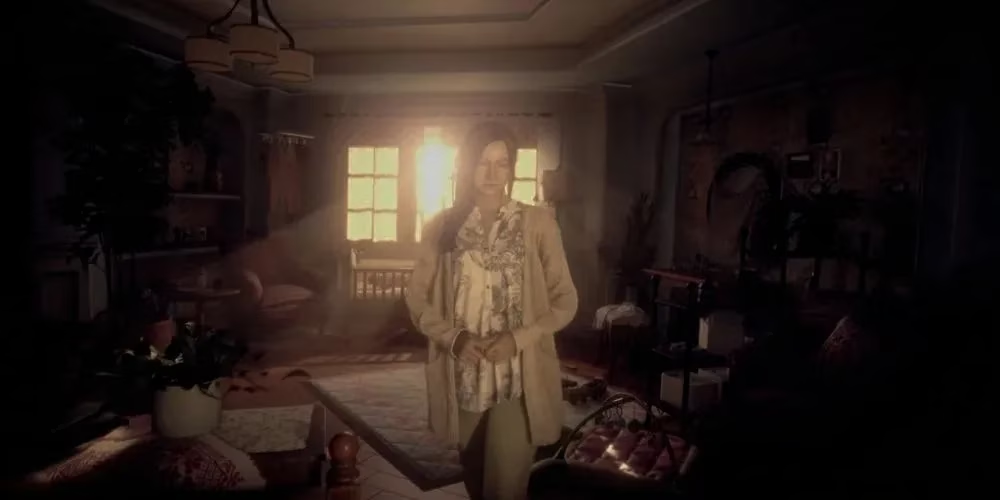
On the other side of the same franchise, Ethan and Mia Winters redefined what it means to fight for family. I guided Ethan through the Louisiana swamps for Mia, and years later in the snowy village, I felt every desperate step he took for baby Rose. The closing scenes of Village left a knot in my throat: Ethan’s self-sacrifice burned like a magnesium flare, brief but blindingly bright. Mia’s own quiet strength, revealed in the aftermath, proved that a parent’s resilience can be a silent fortress rather than a roaring cannon.
The Power Couples Who Fought and Loved
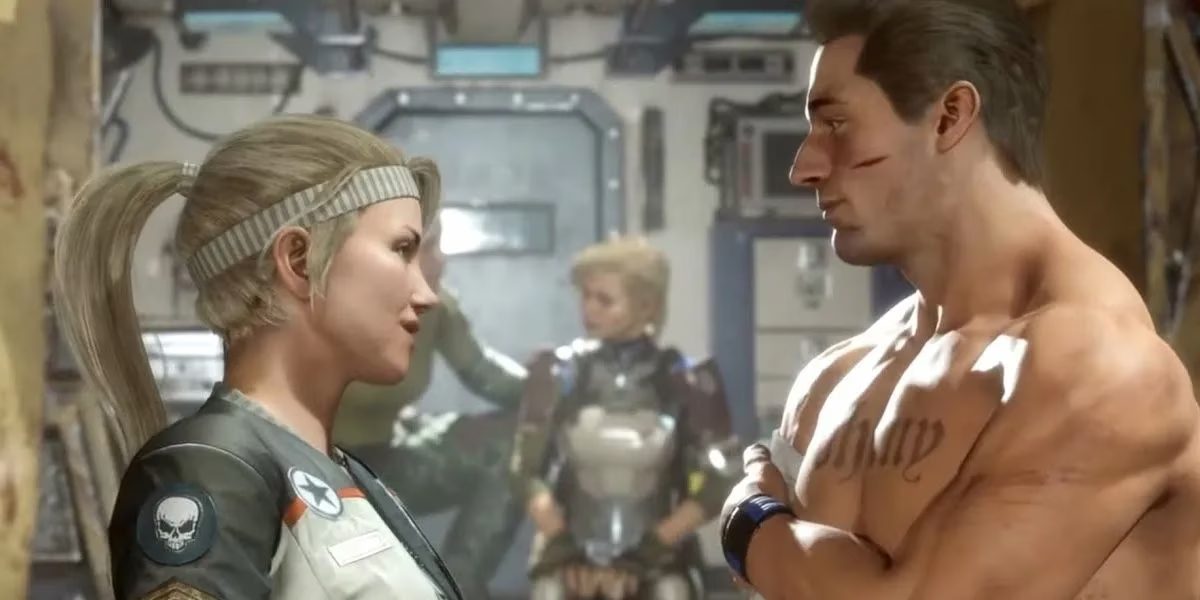
Then there are the parents who wear their flaws like battle armor and still manage to raise champions. Johnny Cage and Sonya Blade from Mortal Kombat began as oil and water—a Hollywood narcissist and a stern special forces officer. That they eventually produced Cassie Cage, one of Earthrealm’s sharpest defenders, still makes me chuckle at the cosmic joke of fate. Their pairing is a kinetic sculpture, perpetually spinning with witty jabs and mutual respect. In a realm dripping with blood feuds and severed spines, their fractured but enduring bond feels surprisingly real.
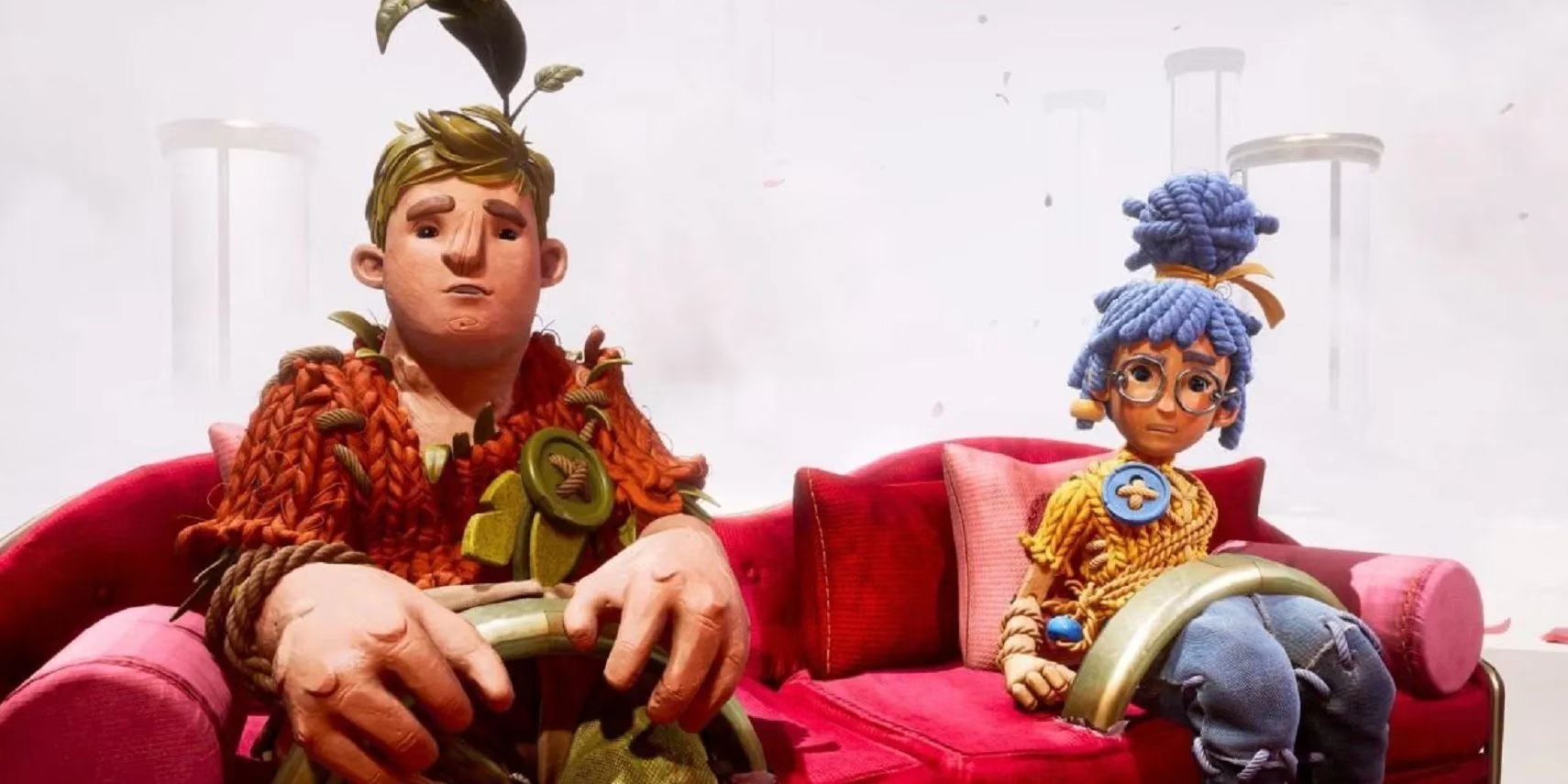
Shifting to the co-op masterpiece It Takes Two, Cody and May walked me through a divorce rendered as a whimsical platformer. At first I resented their bickering, but by the end, when they rebuilt their connection through vacuum cleaners and hammer-nail teamwork, I understood that parental repair is a form of heroism too. Reassuring their daughter Rose wasn’t just a cutscene; it was a sunbeam piercing a room that had been dark too long.
Pixelated Pioneers and Quiet Hearts
Even the oldest icons had parental tales. Pac-Man and Ms. Pac-Man, those yellow gluttons of the arcade era, expanded their maze into a nursery with Pac-Jr. and Pac-Baby. Their games might be simple, but the image of a spherical father racing to rescue his family is a comforting constant. It’s like discovering your grandparents’ love letters: quaint, yes, but full of a warmth that modern chaos rarely replicates.
Less discussed but deeply touching are Yuichiro and Haruka Hikari from Mega Man Battle Network. Lan’s father channeled the soul of their lost twin into MegaMan.EXE, creating a digital guardian angel. That act of love—transforming grief into a lifelong companion—quietly underpins Lan’s entire adventure. It’s a sepia-toned memory in a neon-bright series, reminding me that sometimes the best parenting happens off-screen, in the spaces between code.
As I power down my console at 3 a.m., surrounded by the hum of 2026 and a backlog that stretches like a continent, these virtual parents linger. They aren’t just narrative devices; they are the emotional weather systems that shape the heroes I’ve controlled. From the tragic to the monstrous, from the resilient to the redeemed, they prove that even in a medium of fantasy, the family bond remains the most volatile and precious magic of all.