The year is 2026, and the lines between Hollywood and the gaming universe have been obliterated so thoroughly that you'd think they were hit by a John Woo slow-mo shotgun blast. Gamers, brace yourselves—your favorite virtual worlds are no longer just the playground of code jockeys; they've become the canvas for some of cinema's most unhinged visionaries. Forget any notion that a genius in one creative field can't work miracles in another. These directors didn't just dip a toe; they cannonballed into the pixelated pool with the swagger of a rock star, flipping the entire industry on its head. And honestly? The results are so mind-blowing, you'll need a stiff drink and a save point.
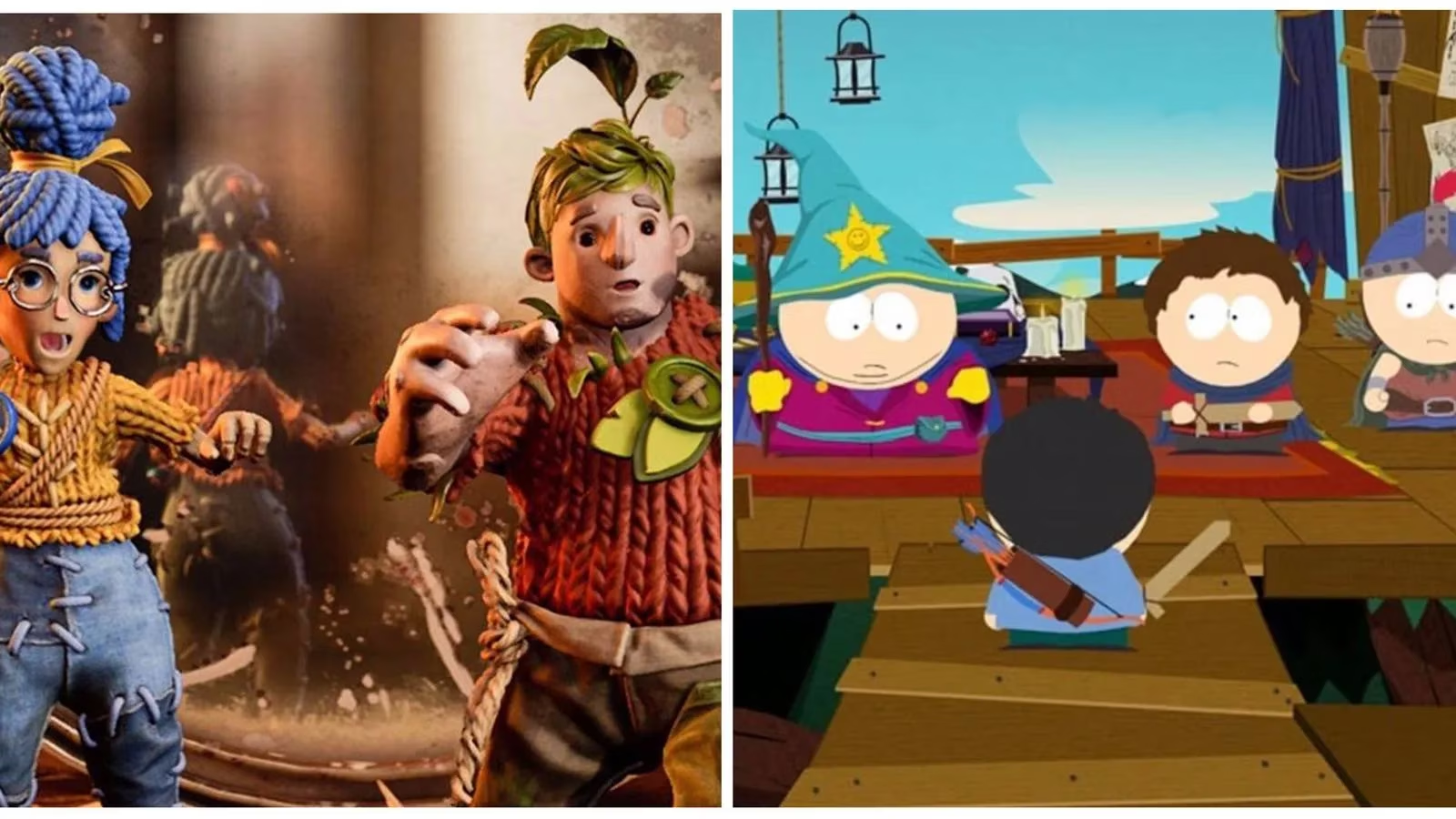
Take Trey Parker and Matt Stone, the twisted minds behind South Park. Before The Stick of Truth dropped in 2014, South Park games were about as appealing as a soggy Cartman snack. But these two comedy anarchists didn't just consult—they dove headfirst into writing, voice acting, and basically every foul-mouthed pixel. The whole project ignited because Trey Parker literally cold-called Obsidian Entertainment and said, "Let's make something that doesn't suck." The result? A turn-based RPG that feels like an extended episode of the show, packed with so many inside jokes and fart gags that it became the gold standard for licensed games overnight. Critics who once panned the franchise’s digital outings were left gobsmacked—holy guacamole, it actually worked!

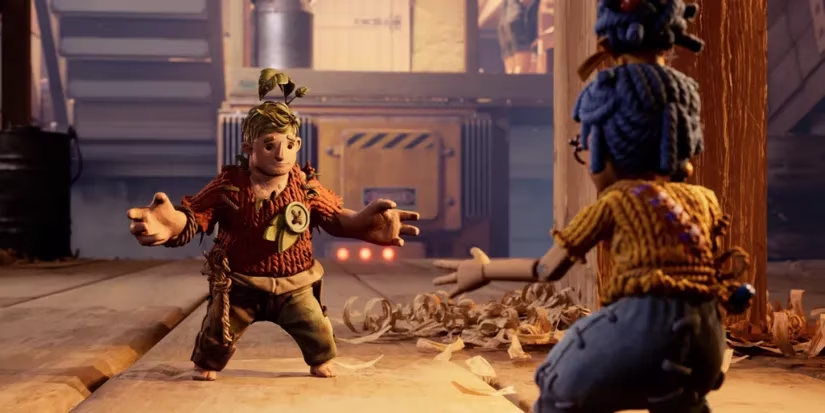
But wait, there's more cinematic sorcery. Josef Fares, a Swedish filmmaker who directed a slew of dramas before founding Hazelight Studios, said "hold my F-bomb" to traditional gaming. His debut A Way Out was a co-op prison break that dripped with movie-like tension, but it was It Takes Two that truly turned heads. This game is a kaleidoscope of mechanics and emotional gut punches, a masterclass in storytelling that only a director with a pathological hatred for boring cutscenes could conceive. Fares practically screams, "Video games can do things movies can't!" and then he proves it chapter after chapter, from flying through a psychedelic dreamscape to dueling a squirrel in a courtroom. It's a rollercoaster that redefines what co-op can be, and the gaming world is still picking its jaw up off the floor.
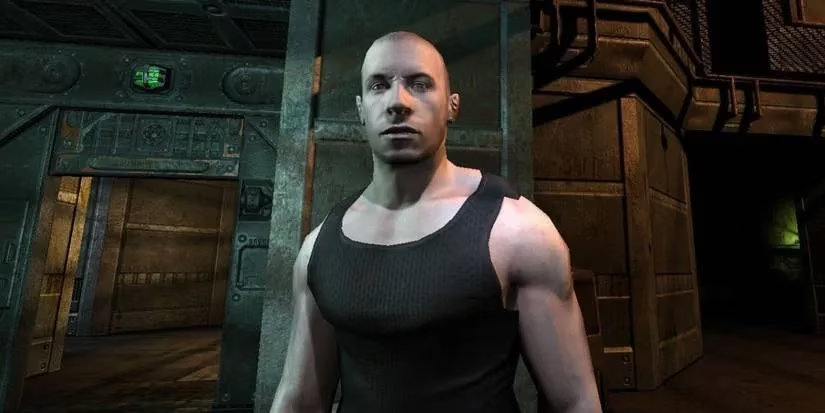
Vin Diesel—yes, the gravel-voiced action star who literally has a D&D character tattooed on himself—brought Riddick to gaming in a way that defied the cursed "movie tie-in" label. His company Tigon Studios, in cahoots with Starbreeze, birthed Escape From Butcher Bay in 2004. Instead of a generic FPS cash grab, they delivered a stealth-heavy first-person experience with graphics so sharp they could slice a retina. Set before Pitch Black, the game leaned into atmosphere and tension, making the player feel like a cornered predator rather than a bullet-sponge. Critics and fans alike were speechless: a movie-based game that didn't belong in the dumpster? Sacré bleu! Diesel's unabashed nerd cred proved that when a star genuinely games, the results are chef's kiss.
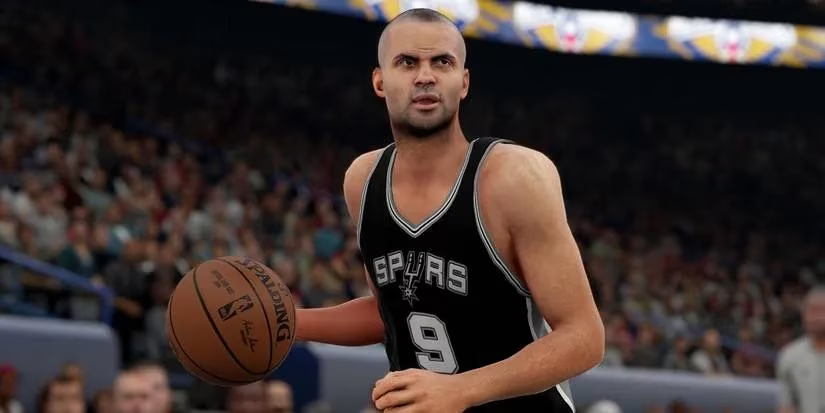
Spike Lee, the legendary director of Do the Right Thing, took a time-out from indie cinema to crash the sports game party with NBA 2K16. His story mode, "Livin' Da Dream," wasn't just a tacked-on career mode—it was a Spike Lee Joint through and through, complete with complex characters, racial tension, and the messy thorns of fame. Basketball? Pfft. Suddenly even those who couldn't tell a layup from a turnover were glued to the screen, mesmerized by a narrative that had more dramatic weight than most Oscar bait. The experiment earned rave reviews and proved that sports games could be more than just roster updates; they could be actual art, dammit.
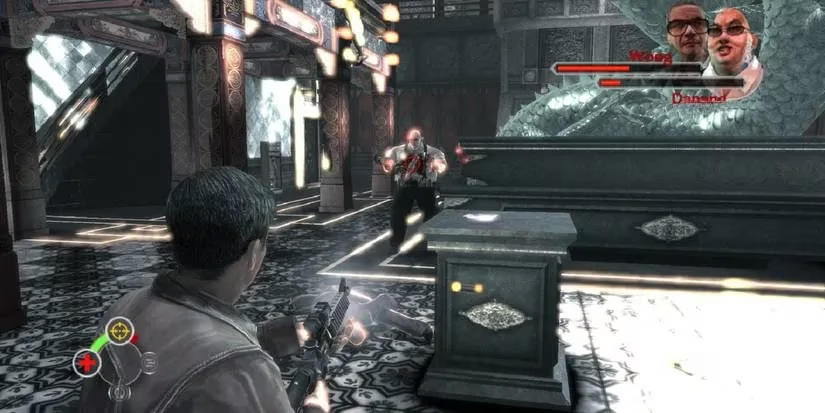
Action auteur John Woo brought his iconic two-gun ballet to Stranglehold, a 2007 sequel to Hard Boiled starring Chow Yun-Fat. This third-person shooter was a symphony of destruction, with environments that disintegrated under a hail of bullets while doves flew by in glorious melodramatic fashion—peak Woo. As a producer and voice actor, Woo ensured the game played like a Hong Kong blood opera, complete with teahouse shootouts and that signature slow-motion dive. It was a love letter to action junkies, delivering a marathon of set-pieces that left thumbs sore and hearts racing.
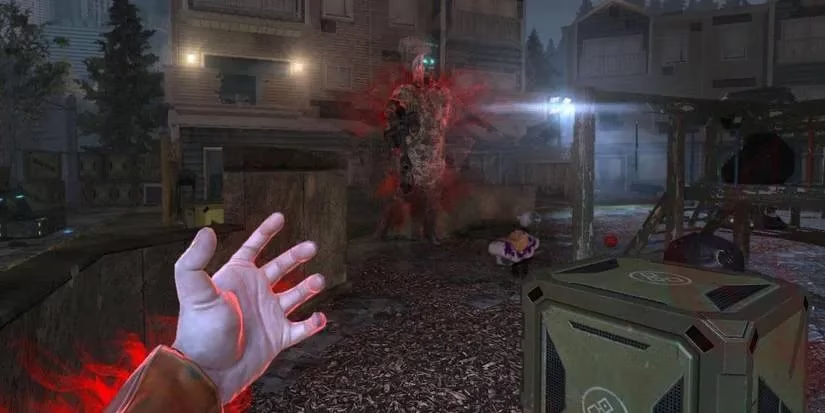
Horror master John Carpenter, the devilish mind behind Halloween and The Thing, lent his terrifying touch to FEAR 3. While the game shifted focus from pure scares to asymmetrical co-op (one player shooting, the other possessing enemies), Carpenter directed the cinematics with a palpable dread. The man knows how to frame a shot to make your skin crawl, and his involvement elevated the franchise's narrative ambitions even if the gameplay took a different path. It's a collaboration that still echoes in horror gaming circles.
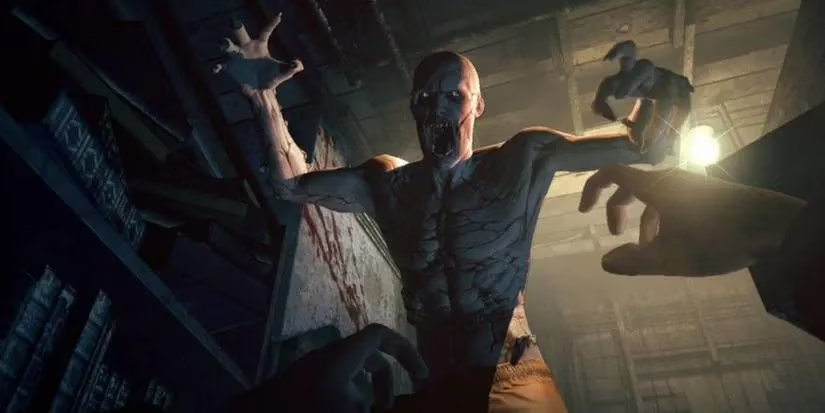
Then there’s J.T. Petty, the indie horror filmmaker who scripted Outlast. Drawing from his twisted S&Man roots, Petty crafted a found-footage nightmare that weaponized night vision and a VHS aesthetic to reduce players to quivering wrecks. The game’s fictional horrors were so potent that they transcended the screen, birthing a franchise that still triggers primal fears in 2026. Petty understood that true terror lies not in what you see, but in what you hear—and Outlast is a symphony of dread.
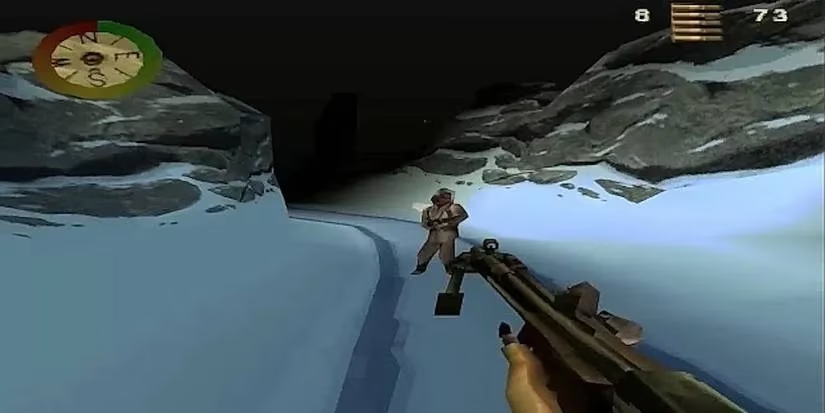
And let us not forget the behemoth: Steven Spielberg. The man who gave us E.T. and Saving Private Ryan looked at the original PlayStation and said, "Let's teach kids about WWII through a game." Thus, Medal of Honor was born. Spielberg's story-driven vision transformed a fledgling FPS into a seminal franchise, spawning sequels and even a modern reboot. It was a history lesson wrapped in adrenaline, proving that a director's guiding hand could make history feel immediate and personal.
In the bold new world of 2026, these collaborations aren't just footnotes—they're the blueprint for where interactive entertainment is heading. Directors bring narrative heft, visual flair, and a kind of reckless genius that pure game developers sometimes lack. The result? Games that hit harder, linger longer, and make you feel like you’ve just survived a blockbuster. So here's to the filmmakers who traded clapperboards for game engines—may their influence continue to blow our minds and expand what gaming can be. GG, Hollywood. GG.