Do you remember how the air tasted when the world was still fresh off the magic of It Takes Two? I do. I was standing in the faint glow of a December screen, heart still tender from the journey through Cody and May’s broken, beautiful world. The year was 2021, and somehow, it was already slipping into a new autumn. In the chilly silence of October 2022, a whisper began to travel from the lips of Josef Fares—a name that by then had become its own kind of incantation. He had already given us the aching shoulders-in-the-dark of Brothers: A Tale of Two Sons, the fierce brotherhood-of-escape in A Way Out, and now the crowning glory of cooperative storytelling. And yet, he wasn’t done. Oh no, he was about to make the entire gaming world lean in a little closer.
I remember clutching the controller a little tighter when the news broke. Fares, in an interview with VGC, spoke with an uncharacteristic coyness. He called his next game a “surprise but in a good way.” That phrase landed on me like a feather on a winter lake—soft, yet spreading ripples through everything. My mind began to paint images. What could possibly follow a game that claimed Game of the Year at The Game Awards? What shape would this new surprise take, when his previous creations had already reshaped how I thought about cooperative play? The man who once famously told the Oscars exactly what he thought, who wore his heart so openly on a flamboyant sleeve, was now holding a secret close. And gosh, if that didn’t just make me ache to know more.
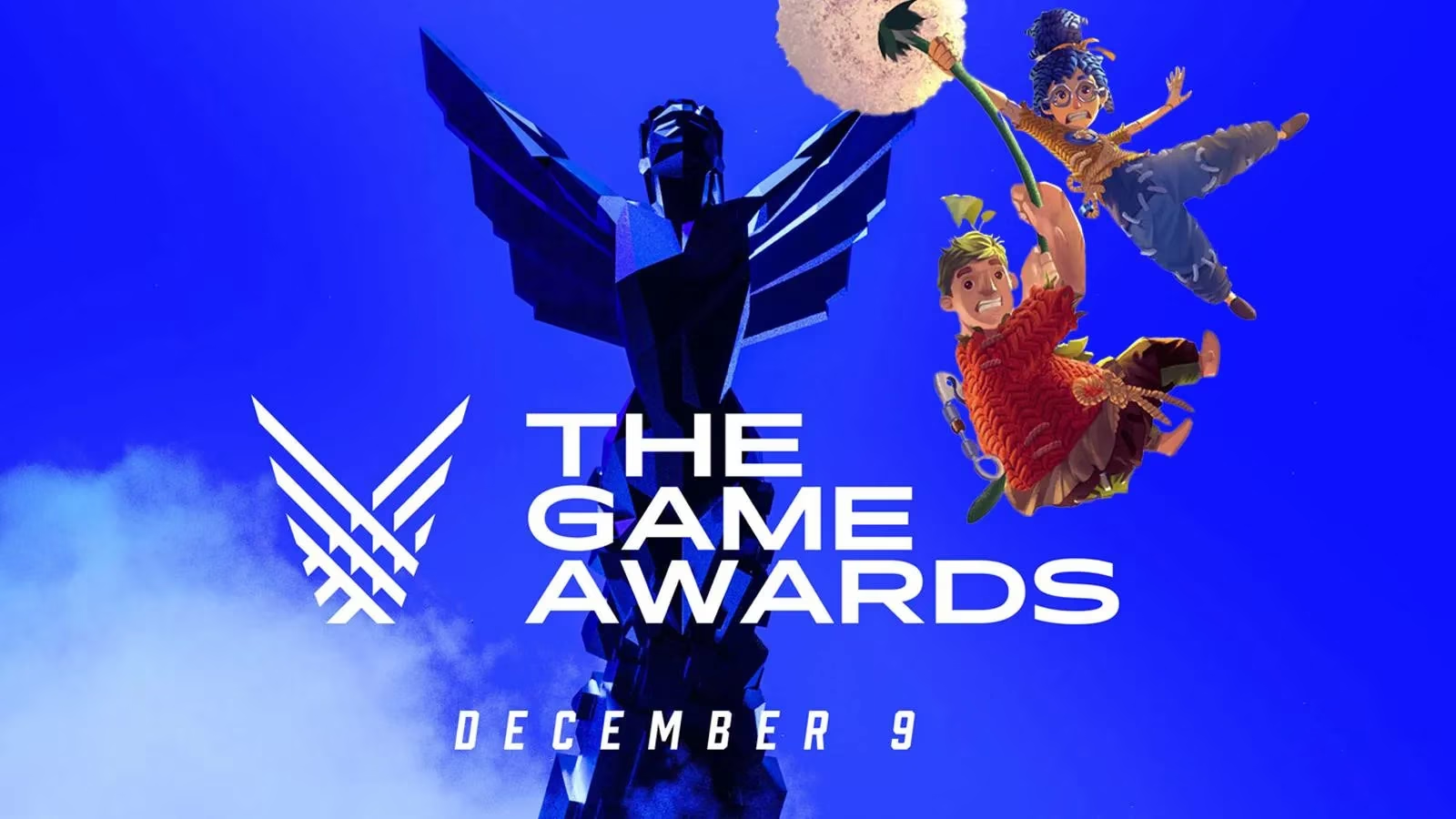
The anticipation grew like ivy on the walls of my imagination. November came, and It Takes Two finally made its way to Nintendo Switch—I remember the bittersweet joy of seeing new players take their first step onto that shelf, holding a partner’s hand. But my eyes were fixed on December 8th. The Game Awards 2022 were approaching, and Fares had confirmed he would be there. True to his nature, he stopped just short of promising a reveal on Geoff Keighley’s stage, yet the clues were scattered like little gifts. A year and a half of development had passed since the last release, and just weeks earlier, he had posted a cryptic image on social media: himself flanked by two actors in motion capture suits, the caption reading “Sneak peek of the next game.” I swear, my heart did that little skip, the one that comes when a friend tells you they have something wonderful to show you but they refuse to open the box just yet.
You know what it’s like, hanging between hope and mystery? The room felt heavier with possibility. And the news that Fares would also be the one presenting the Game of the Year award that night—following in the footsteps of Neil Druckmann the year prior—only added to the theater of it all. It felt like a scene from one of his own stories: the passionate director, microphone in hand, standing in front of a sea of faces, ready to hand over the crown while secretly wearing one of his own beneath his coat. Would the stage lights catch the edges of a new logo? Would the orchestra swell over a trailer that would leave us breathless? My mind ran wild, but that’s exactly what his games teach you, isn’t it? That the best moments are the ones you can’t predict.
But here’s the thing—by the time we reached that night, the world had learned something profound: patience with a creator like Fares isn’t a burden, it’s part of the narrative. He had always designed games that demanded two souls to press the buttons side by side, and now, in a way, all of us players were doing the same. We were waiting together. A quiet, global co-op where the only objective was to trust in the surprise that was “a surprise but in a good way.” When the announcement finally came, it wasn’t what anyone expected, yet it was exactly what we needed. It proved that this director’s mind doesn’t just invent mechanics; it moonlights as a poet who writes in the language of play.
Now, in 2026, I look back at that winter evening and smile. That game—Hazelight’s next, the one that shimmered on the horizon like a distant city—has long since been released, played, cried over, and celebrated. It did, indeed, become something completely different from the DNA of A Way Out and It Takes Two, just as he had promised. The boy who once gave us two brothers on twin sticks, the man who gave us prison breaks and a couple fighting off divorce with magical tools, had handed us a whole new kind of heartbreak, or love, or adventure. (I won’t spoil it here, because some drops of joy still need to be met without a map.) But what sticks with me most is how that period of waiting felt alive. The speculation in forums, the childish drawings of what the logo might look like, the conversations that bloomed between estranged friends who reconnected just to share theories—all of that was Hazelight’s doing, before a single frame of the new game even appeared.
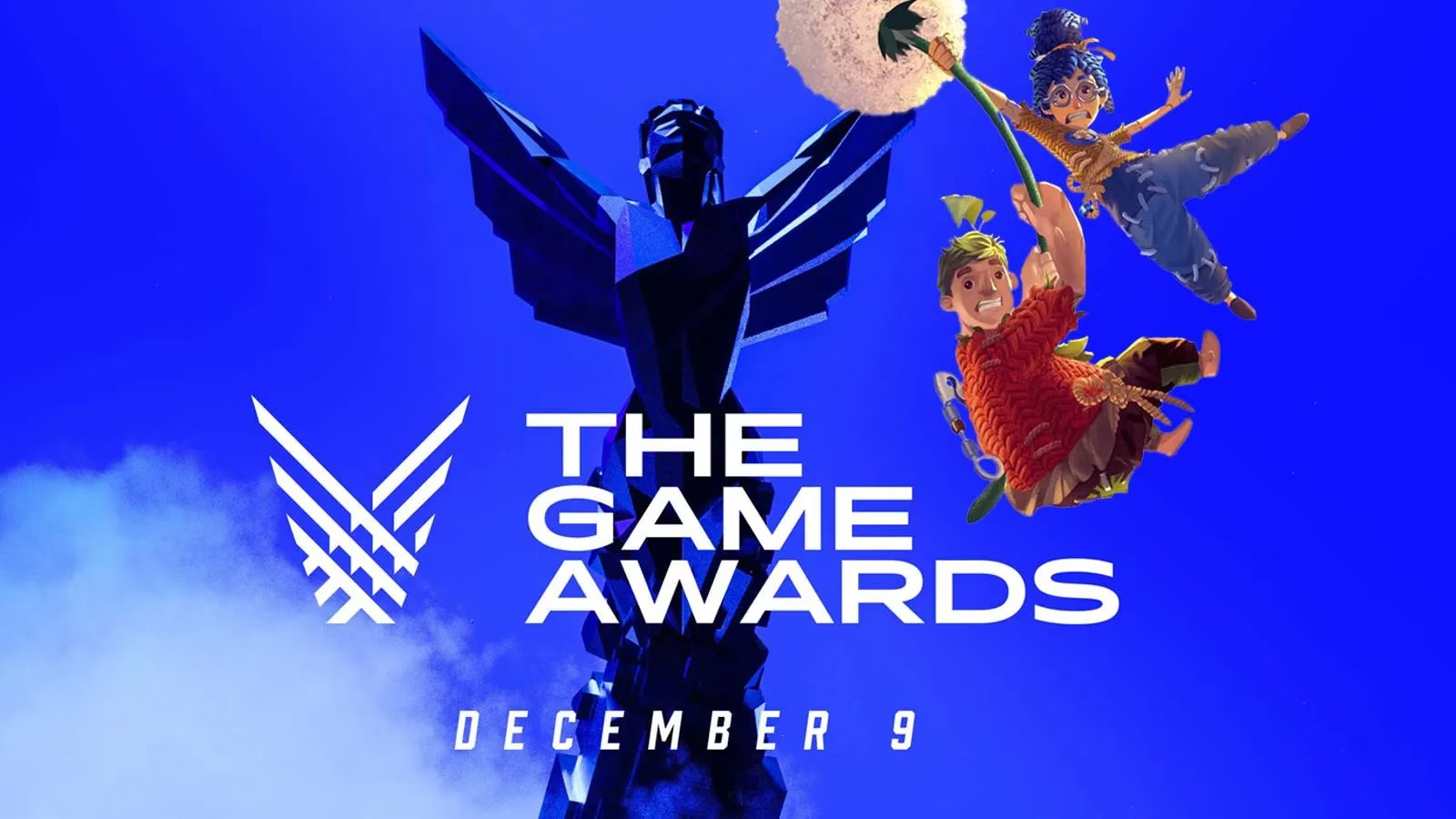
The industry has changed since then, of course. 2026 greets me with new hardware, new battle passes, new buzzwords that try to capture that evasive “connection.” But whenever I feel a little jaded, I turn back to that memory. The memory of a director who could have shouted any future at us, but instead chose to whisper. He understood that the space between announcement and arrival is a garden of its own, and he invited us to tend it. We weeded it with hope, watered it with rumor, and when the final blossom unfolded, it was ours, collectively, more than any single-player or multiplayer tag could account for.
So here I am, penning this love letter to a night that happened years ago, but still feels like yesterday. If you were there, you know that particular tingle. If you weren’t, consider this an invitation to find your own “surprise but in a good way,” maybe by revisiting the old Hazelight catalog on whatever screen you have now. Because Josef Fares and his team taught me that games are best when they bind us, even before we play them. And honestly? I’m still listening for the next whisper. Always.