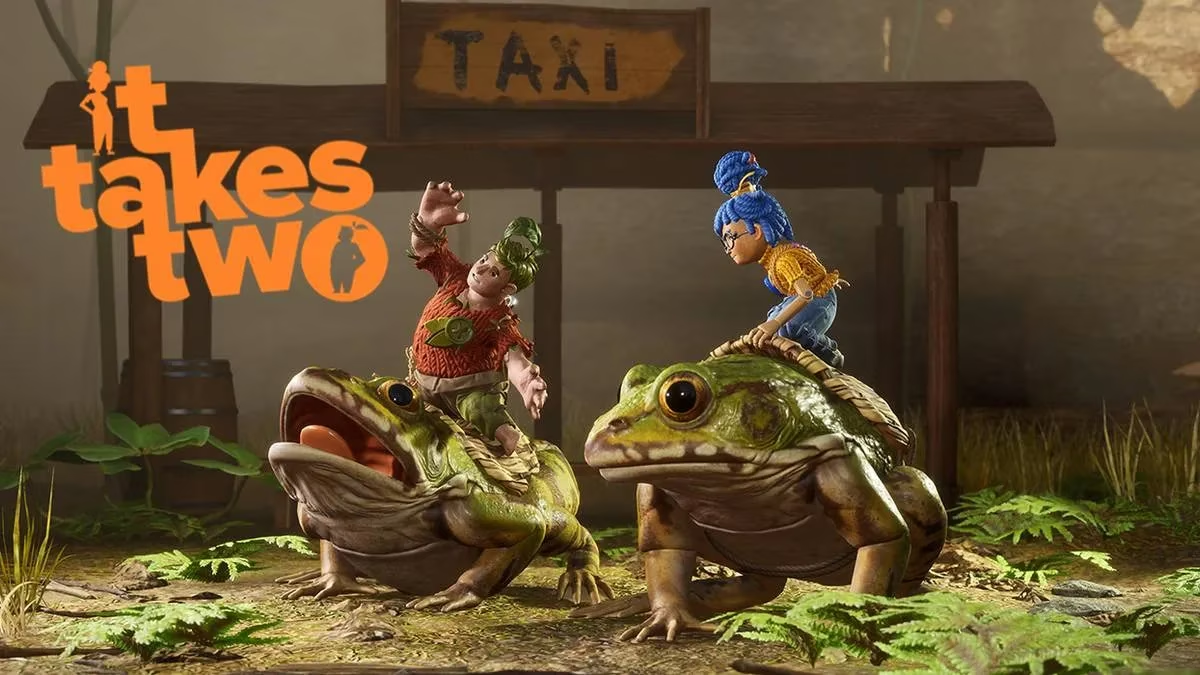
I still remember the first time I played It Takes Two and realized how much design confidence it takes to say no. No solo mode. No collectible checklist. No endless padding. In 2026, years after its March 26, 2021 launch, Hazelight Studios' co-op-only platformer still feels like a provocation, and I mean that as praise. Is it stubbornness or clarity? I think it is clarity, especially when I compare it with the way so many modern games stretch their best ideas until they wear thin.
A Co-Op Game That Refuses to Compromise
Josef Fares, the founder of Hazelight Studios, has never been shy about speaking his mind or testing unusual ideas. His studio built A Way Out and then It Takes Two around a simple but demanding premise: two players must cooperate to solve problems. There is no single-player option. You play online or in local split-screen co-op, and the game is designed around two perspectives, two sets of abilities, and two people talking through every obstacle. If I remove the other player, the game stops being the game. That is not a marketing gimmick. It is the foundation.
It Takes Two earned the distinction of being the best-reviewed game of 2021 when it launched, and that success matters because it proves a co-op-only game can be more than a niche experiment. Hazelight did not soften the idea for solo players. The studio committed to it. I respect that commitment because I have seen too many games bolt on a solo path that feels like a watered-down compromise. Here, the cooperation is the point.
The Real Target Is Bloat, Not Single-Player Stories
Fares has argued that single-player games are often too long and that their mechanics are used for too long. He wants co-op games to become commonplace again, the way they were in earlier eras. I do not agree with every word of that position, but I understand the frustration behind it. How many times have I loved a game's first ten hours and then felt the systems repeating themselves for another thirty? How often does a strong mechanic become a chore because a game refuses to end?
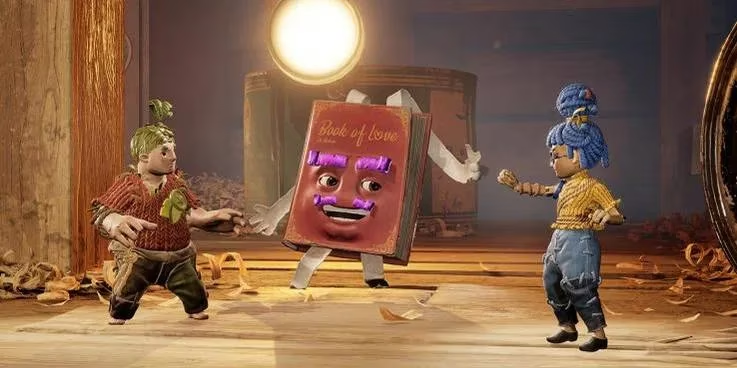
It Takes Two does not offer much replayability, and it does not fill its world with collectibles that exist mainly to pad playtime. Fares has called the industry's obsession with replayability weird, arguing that more people fail to finish games than ever replay them. He points to The Witcher 3 as an example, noting that only around 30 percent of players finished it. That statistic is a useful reality check. If most players do not reach the credits, why should every game be designed as if everyone will immediately start a second run?
Why Players Still Defend Long Games
Still, I cannot pretend that replayability and length are only industry buzzwords. For many players, they are about value. When publishers push prices toward 70 dollars, a game that offers dozens or hundreds of hours can feel safer. Some players want one purchase to last months. Others simply fall in love with a world and do not want to leave it.
That is why examples like The Elder Scrolls 5: Skyrim and Persona 5 complicate Fares's argument. Skyrim released nearly a decade before It Takes Two and has been remastered and re-released across multiple platforms because players keep returning to it. Persona 5 can take 100 to 200 hours to complete, yet it was received well enough to earn an enhanced edition, Persona 5 Royal, in March 2020. These are long single-player experiences that seem to contradict the idea that games are simply too long. I think both approaches can coexist. The problem is not length by itself. The problem is length without purpose.
What 2026 Adds to the Argument
By 2026, Hazelight's philosophy looks even more deliberate. The studio followed It Takes Two with Split Fiction in March 2025, another co-op-only adventure built around two players, and it reinforced the same core belief: cooperation can be a design language, not a bonus feature. It Takes Two also remains widely available on PC, PS4, PS5, Xbox One, Xbox Series X/S, and Nintendo Switch, with a player base that has grown well beyond its launch window. That longevity is interesting because it comes from focus rather than endless content.
I find that contrast healthy. The market has room for compact co-op games that end before they overstay their welcome, and it has room for massive solo RPGs that players happily inhabit for months. Would I want every game to be like It Takes Two? No. Would I like more games to ask whether their length serves the idea? Absolutely.
My Takeaway
-
🎮 It Takes Two proves that a co-op-only game can be a critical and commercial success.
-
✂️ Fares's real argument is against bloat: mechanics, worlds, and campaigns that continue after their best ideas are gone.
-
📊 Completion data matters, but it is not the only measure of value; some players genuinely love long, immersive games.
-
🤝 The best lesson is not that every game should be short. It is that every game should justify its length.
In 2026, I still see It Takes Two as a corrective rather than a rule. It is not a short game, but it is a focused one. It uses cooperation to solve problems, and it trusts that the partnership itself is enough. That trust is rare, and it is exactly why the conversation around Fares's comments still matters.